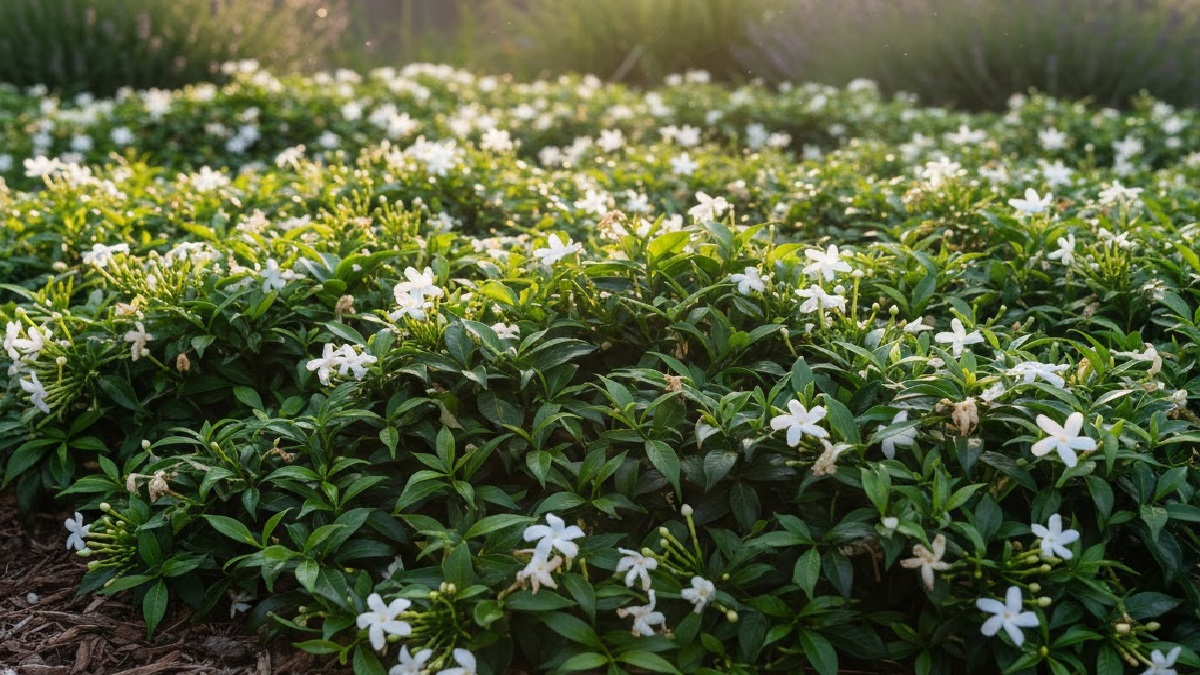
Asiatic jasmine is a low-maintenance plant that thrives in full sun to partial shade and adapts well to most well-drained soils. It should be watered regularly during its first growing season to establish strong roots, but once established it is drought-tolerant and requires only occasional watering. The plant performs best in warm climates and handles heat and humidity well. A light application of a balanced fertilizer in spring supports healthy growth, while occasional pruning helps control its spread and maintain a neat appearance. Asiatic jasmine is generally resistant to pests and diseases, making it an excellent choice for easy, long-term ground cover.
Asiatic jasmine grows best in full sun to partial shade. It tolerates shade well, though plants grown in brighter light tend to be denser and more vigorous, while those in partial shade maintain richer green foliage.
Asiatic jasmine prefers well-drained soil and adapts easily to loamy, sandy, or clay soils. It tolerates a wide range of soil pH levels, including acidic, neutral, and slightly alkaline conditions, as long as drainage is good.
Asiatic jasmine needs regular watering during its first growing season to help establish strong roots. Once established, it becomes drought-tolerant and requires only occasional watering, as overwatering can lead to root problems.
Asiatic jasmine thrives in warm temperatures and performs best in climates with mild winters and hot summers. It tolerates high humidity well and maintains healthy growth in both humid and moderately dry conditions, making it suitable for a wide range of warm-region landscapes.
Asiatic jasmine benefits from light feeding and does not require heavy fertilization. Apply a balanced, slow-release fertilizer in spring to encourage healthy growth and lush foliage. Once established, it generally performs well with minimal additional feeding.
Asiatic jasmine requires occasional pruning to control its spread and maintain a neat, dense appearance. Pruning is best done in late winter or early spring, though light trimming can be done anytime during the growing season to shape the plant or remove stray growth.
Asiatic jasmine is easy to propagate, most commonly by stem cuttings or layering. Softwood or semi-hardwood cuttings taken in spring or early summer root readily in moist, well-drained soil. The plant also spreads naturally when trailing stems touch the ground and form roots, making layering a simple and effective propagation method.
Growing Asiatic jasmine from seed is uncommon and slow, as the plant rarely produces viable seeds and germination can be unreliable. When seeds are available, they should be sown on the soil surface in a warm, moist environment with bright, indirect light. Keep the soil consistently moist but not soggy, and be patient, as seedlings develop slowly. For faster and more reliable results, propagation by cuttings or layering is generally preferred.
Asiatic jasmine can be grown in containers when young, using a pot with drainage holes and a well-draining potting mix. Choose a wide container to accommodate its spreading habit. Repot in spring when roots become crowded, moving the plant to a slightly larger pot. Once established, it is better suited for landscape planting, as frequent repotting is rarely needed.
Asiatic jasmine is evergreen in mild climates and requires little winter care where temperatures stay above freezing. In colder regions, container-grown plants should be moved to a protected location or indoors before hard frost. Mulching around outdoor plants helps insulate the roots and protect them from cold damage during winter.
Asiatic jasmine is grown mainly for its foliage and rarely blooms, but the chance of flowering improves under the right conditions. Plant it in full sun to light shade, ensure well-drained soil, and avoid excessive nitrogen fertilizer, which promotes leaf growth over flowers. Mild stress from slightly reduced watering once the plant is established can also encourage blooming. When flowers do appear, they are small, pale, and lightly fragrant.
Asiatic jasmine is generally pest- and disease-resistant, making it a reliable, low-maintenance ground cover. Occasionally, it may be affected by scale insects, aphids, or spider mites, especially when grown in stressed or poorly ventilated conditions. Leaf spot, root rot, or stem rot can occur in overly wet or poorly drained soil. Other common problems include yellowing leaves from overwatering or nutrient imbalance and sparse growth in deep shade. Most issues can be prevented by providing good drainage, proper spacing, adequate light, and avoiding excess watering or fertilizer.