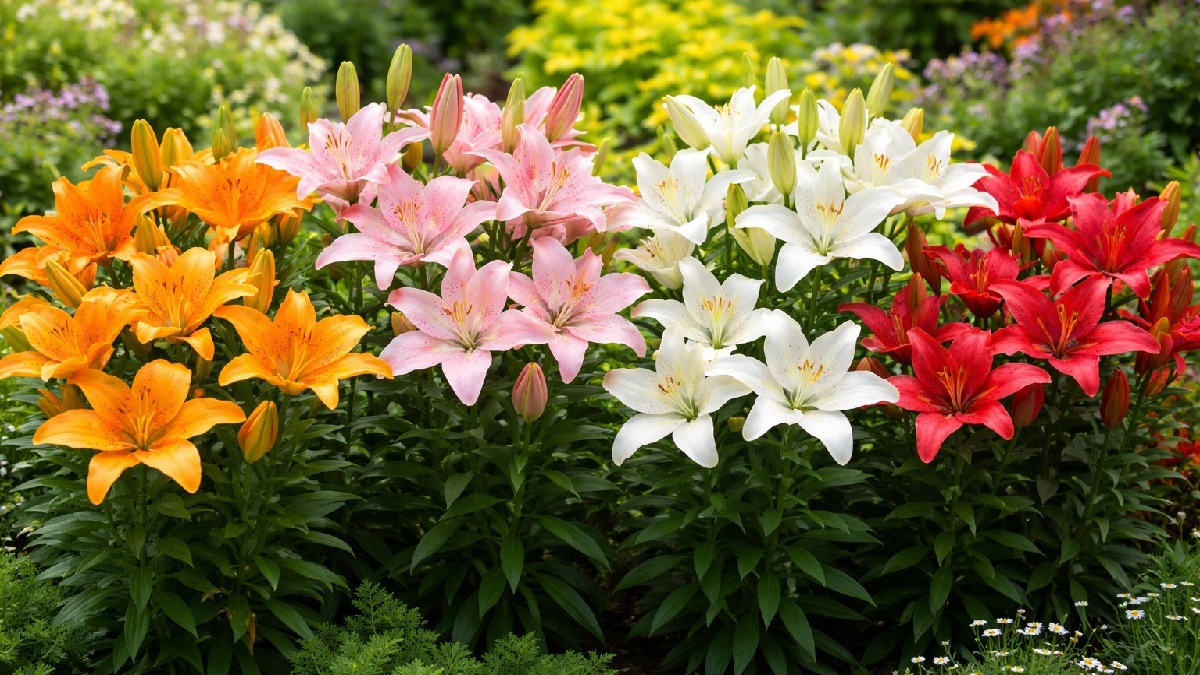
Asiatic lilies are relatively low-maintenance but thrive best with proper care. They prefer full sun to partial shade and well-drained, fertile soil enriched with organic matter. Regular watering is important during the growing season, but avoid waterlogging, as bulbs can rot in soggy soil. Applying a balanced fertilizer in spring supports healthy growth and abundant blooms. Mulching helps retain soil moisture and suppress weeds. Staking taller varieties may be needed to support flower stems, and deadheading spent flowers encourages tidier growth. After flowering, allow the foliage to die back naturally to nourish the bulbs for the next season.
Asiatic lilies grow best in full sun, ideally receiving at least 6-8 hours of direct sunlight per day. They can tolerate partial shade, but too little light may reduce flowering and cause weaker stems.
Asiatic lilies prefer well-drained, fertile soil rich in organic matter. They thrive in loamy or sandy soils with a slightly acidic to neutral pH, and good drainage is essential to prevent bulb rot. Adding compost or aged manure can improve soil fertility and structure.
Asiatic lilies need regular watering during the growing season to keep the soil consistently moist but not soggy. Overwatering can cause bulb rot, so ensure good drainage. Once the foliage begins to die back after flowering, reduce watering gradually.
Asiatic lilies thrive in moderate to warm temperatures and are hardy in USDA zones 3-8. They prefer moderate humidity and well-ventilated conditions; excessively humid or poorly drained environments can encourage fungal diseases. Mulching helps regulate soil temperature and retain moisture during hot periods.
Asiatic lilies benefit from balanced, slow-release fertilizer applied in spring as new growth emerges. A fertilizer high in phosphorus can promote strong root development and abundant flowering. Light feeding during the growing season helps maintain healthy foliage and vibrant blooms, but avoid over-fertilizing, which can lead to excessive leaf growth at the expense of flowers.
Asiatic lilies require minimal pruning. After flowering, deadhead spent blooms to prevent seed formation and encourage the plant to focus energy on bulb growth. Allow the foliage to die back naturally, as it nourishes the bulbs for next year's growth. Remove only yellowed or damaged leaves to keep the plant tidy.
Asiatic lilies are commonly propagated through bulb division and scales. Mature bulbs can be divided in early fall or after the foliage dies back, with each section containing a healthy bulb and roots. Individual bulb scales can also be removed, treated with a fungicide, and placed in moist, well-drained soil or vermiculite to develop new bulblets. This method produces new plants, though it takes a few years for them to reach flowering size.
Asiatic lilies can be grown from seeds, but this method is slow and less common, as seedlings may take 3-5 years to flower. Sow fresh seeds in a well-draining seed-starting mix, lightly cover them with soil, and keep the medium consistently moist at a warm temperature (around 65-75°F). Germination can take several weeks to months. Growing from bulbs or divisions is preferred for faster and more reliable flowering.
Asiatic lilies can be grown in pots or containers with well-draining, fertile soil and good drainage holes. Choose a container deep enough to accommodate the bulbs' roots. Repotting is best done every 2-3 years or when bulbs become crowded, ideally in early fall or late winter before new growth starts. When repotting, divide overcrowded bulbs and plant them at the correct depth-about 2-3 times the bulb's height-to ensure healthy growth and flowering.
Asiatic lilies are cold-hardy in most regions, but in areas with harsh winters, extra protection may be needed. Mulch heavily around outdoor bulbs to insulate them from freezing temperatures. Container-grown lilies should be moved to a cool, frost-free location or indoors during winter. After flowering, allow the foliage to die back naturally, as this helps the bulbs store energy for the next season.
To encourage Asiatic lilies to bloom, plant them in full sun with well-drained, fertile soil, and avoid excessive nitrogen fertilizer, which promotes leaf growth over flowers. Regular watering during the growing season and applying a phosphorus-rich fertilizer in spring can support strong root and flower development. Deadheading spent flowers and allowing foliage to die back naturally also helps bulbs store energy for the next season's blooms. Proper spacing and good air circulation reduce stress and promote healthier, more abundant flowering.
Asiatic lilies are generally hardy and low-maintenance, but they can occasionally face pests and diseases. Common pests include aphids, lily beetles, and slugs, which can damage foliage and flowers if not managed. The plant is also susceptible to fungal diseases such as botrytis blight and bulb rot, especially in poorly drained or overly humid conditions. Other problems may include yellowing leaves from overwatering, nutrient deficiencies, or crowded bulbs, and weak or sparse flowering if the plants receive too little sunlight or excessive nitrogen. Most issues can be prevented by providing well-drained soil, adequate spacing, proper watering, and good air circulation, ensuring healthy growth and vibrant blooms.