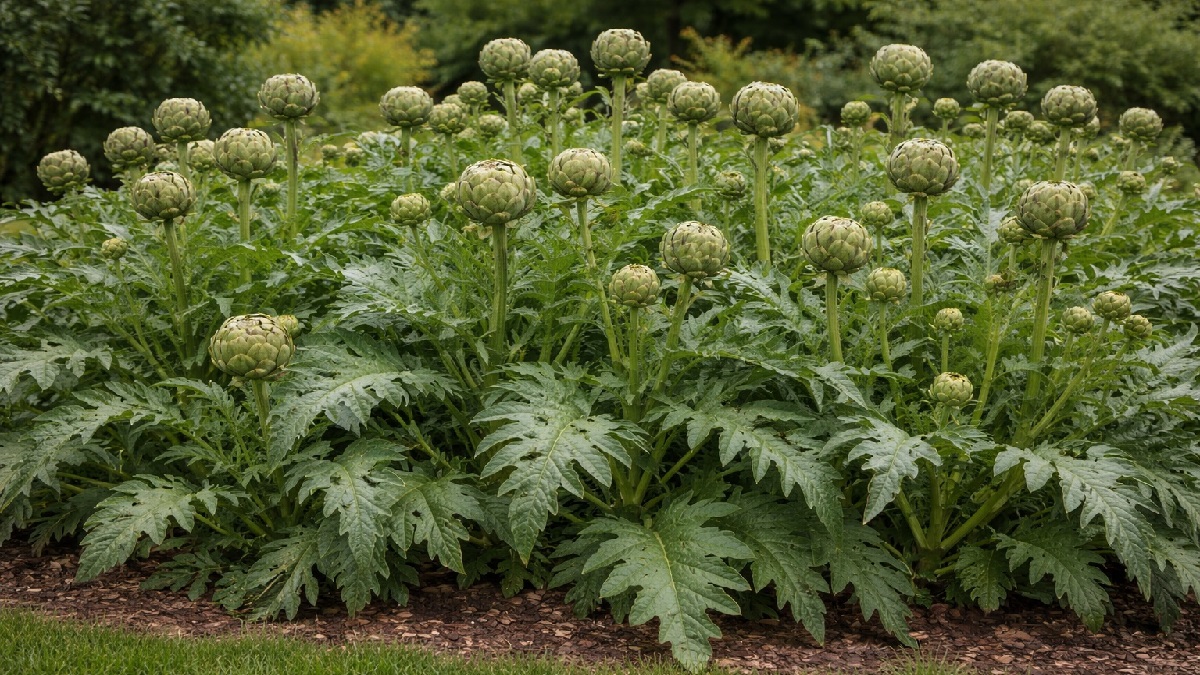
Artichokes thrive in full sun and rich, well-drained soil with consistent moisture. Water regularly, especially during dry periods, and mulch to retain soil moisture and regulate temperature. Feed with compost or a balanced fertilizer during the growing season to support strong growth and bud production. Remove spent buds to encourage continued harvest, and cut plants back after flowering. In colder climates, protect crowns with mulch during winter. With proper care, artichokes produce large, flavorful buds and attractive foliage.
Artichokes (Cynara scolymus) grow best in full sun, requiring at least 6-8 hours of direct sunlight daily. Adequate sunlight promotes strong plant growth, large edible buds, and healthy foliage, while too much shade can reduce yield.
Artichokes (Cynara scolymus) prefer rich, fertile, well-drained soil with plenty of organic matter. Loamy soil is ideal, and good drainage is essential to prevent root rot. Slightly acidic to neutral soil helps support healthy growth and bud production.
Artichokes (Cynara scolymus) require regular, deep watering to keep the soil consistently moist, especially during active growth and bud development. Avoid waterlogging, but do not allow the soil to dry out completely, as inconsistent watering can reduce bud quality.
Artichokes (Cynara scolymus) thrive in mild climates with cool winters and warm summers, performing best in temperatures between 60-75°F (15-24°C). They tolerate moderate humidity but prefer good air circulation to prevent fungal diseases.
Artichokes (Cynara scolymus) are heavy feeders and benefit from regular fertilization. Apply compost or a balanced fertilizer every 4-6 weeks during the growing season to promote vigorous growth and large, healthy buds.
Artichokes (Cynara scolymus) require minimal pruning during the growing season. Remove spent flower buds after harvest to encourage continued production, and cut the plant back to the ground after flowering or at the end of the season to promote healthy regrowth.
Artichokes (Cynara scolymus) are commonly propagated by division rather than seed. In spring, separate healthy offshoots from established plants and replant them in well-prepared soil. This method ensures faster growth and consistent, high-quality bud production.
Artichokes (Cynara scolymus) can be grown from seed, though plants may take longer to produce buds than those grown from divisions. Start seeds indoors 8-10 weeks before the last frost, keep soil moist and warm, and transplant seedlings outdoors once temperatures stabilize.
Artichokes (Cynara scolymus) can be grown in large containers with rich, well-drained soil. Choose a deep pot to accommodate their extensive root system. Repot or refresh the soil every 1-2 years to maintain fertility and support healthy growth and bud production.
Artichokes (Cynara scolymus) are perennial in mild climates and benefit from winter protection in colder regions. Cut plants back after the growing season and apply a thick layer of mulch over the crown to protect it from frost and freezing temperatures.
To encourage artichokes (Cynara scolymus) to bloom, provide full sun, rich well-drained soil, and consistent moisture throughout the growing season. Regular feeding supports strong growth, and allowing some buds to mature without harvesting will result in large, striking purple flowers.
Artichokes (Cynara scolymus) may occasionally be affected by pests such as aphids, slugs, and snails, which feed on leaves and buds. Diseases like powdery mildew, botrytis, or root rot can occur in damp, poorly drained conditions. Proper spacing, good air circulation, well-drained soil, and regular monitoring help prevent most problems and keep plants healthy.