Iceberg Climbing Rose – Complete Growing & Care Guide
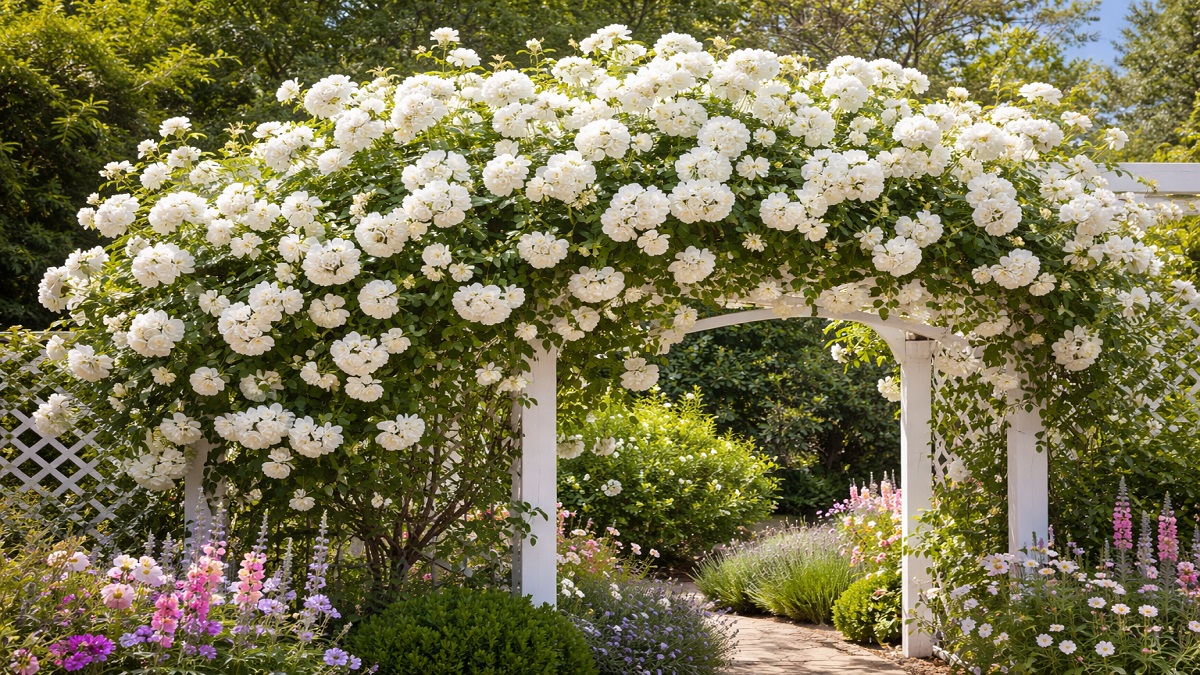
Introduction to Iceberg Climbing Rose
The Iceberg Climbing Rose is one of the most popular and widely grown climbing roses in the world. Known for its stunning clusters of pure white blooms and its ability to flower repeatedly throughout the season, this rose variety has become a favorite among gardeners, landscapers, and rose enthusiasts.
Originally developed as a bush rose, the climbing form of Iceberg offers all the beauty of the original variety but with added vertical growth, making it perfect for trellises, fences, pergolas, and walls. Its elegant appearance, combined with relatively low maintenance requirements, makes it ideal for both beginners and experienced gardeners.
Whether you are looking to create a romantic garden arch or cover a dull wall with cascading white flowers, the Iceberg Climbing Rose is an excellent choice.
Key Features of Iceberg Climbing Rose
| Feature | Details |
|---|---|
| Flower Color | Pure white (sometimes with a slight creamy tone) |
| Fragrance | Mild, pleasant scent |
| Blooming | Repeat flowering throughout the season |
| Height | 10 to 15 feet (3 to 4.5 meters) |
| Spread | 6 to 8 feet |
| Growth Type | Vigorous climber |
| Sunlight | Full sun preferred |
| Maintenance | Low to moderate |
Its ability to produce abundant blooms over a long period is what makes Iceberg one of the most reliable and rewarding climbing roses.
History and Origin
The original Iceberg rose was introduced in 1958 and quickly gained worldwide recognition for its exceptional flowering ability and disease resistance. The climbing version was later developed as a sport (a natural mutation) of the bush form.
Since its introduction, Iceberg has received numerous awards and remains a staple in gardens across different climates.
Ideal Growing Conditions
1. Sunlight Requirements
Iceberg Climbing Roses thrive best in full sunlight. They require at least 6 to 8 hours of direct sunlight daily to produce abundant blooms.
2. Soil Requirements
Well-draining soil is essential for healthy growth. The ideal soil should be:
- Rich in organic matter
- Slightly acidic to neutral (pH 6.0–7.0)
- Loose and well-aerated
3. Temperature and Climate
Iceberg roses perform well in a wide range of climates. They are hardy and adaptable, though they prefer moderate temperatures. In extremely hot climates, some afternoon shade may be beneficial.
Planting Iceberg Climbing Rose
Step-by-Step Planting Guide
- Choose a sunny location with good air circulation
- Dig a hole twice as wide and deep as the root ball
- Mix compost or organic matter into the soil
- Place the plant carefully and spread the roots
- Fill the hole and water thoroughly
- Install a support structure like a trellis or fence
Planting is best done in early spring or late winter when the plant is dormant.
Watering Requirements
Proper watering is crucial for healthy growth and flowering. Iceberg roses prefer consistent moisture but do not tolerate waterlogged soil.
- Water deeply once or twice a week
- Increase watering during hot weather
- Avoid overhead watering to prevent fungal diseases
Mulching around the base helps retain moisture and regulate soil temperature.
Fertilizing for Best Growth
Regular feeding ensures vigorous growth and abundant blooms.
- Use a balanced rose fertilizer
- Apply in early spring, mid-season, and after the first bloom
- Avoid over-fertilizing, which can reduce flowering
Organic options like compost, manure, and bone meal can also be highly beneficial.
Training Iceberg Climbing Rose
Training is essential for shaping the plant and maximizing flowering. Unlike upright plants, climbers need guidance to grow horizontally or diagonally.
- Secure canes to a trellis or support
- Train branches horizontally to encourage more blooms
- Use soft ties to avoid damaging stems
Proper training helps distribute flowers evenly and creates a fuller, more attractive display.
Pruning Guide
When to Prune
Pruning should be done in late winter or early spring before new growth begins.
How to Prune
- Remove dead, damaged, or diseased wood
- Thin out crowded areas for better airflow
- Cut back side shoots to encourage flowering
Regular pruning keeps the plant healthy and promotes continuous blooming.
Common Pests and Diseases
Iceberg roses are relatively disease-resistant but may still encounter some common issues.
Pests
- Aphids
- Spider mites
- Whiteflies
Diseases
- Black spot
- Powdery mildew
- Rust
Preventive measures include proper spacing, good air circulation, and avoiding overhead watering.
Benefits of Growing Iceberg Climbing Rose
- Long flowering season
- Elegant white blooms enhance any garden
- Low maintenance compared to many other roses
- Versatile for vertical gardening
- Attracts pollinators like bees
Landscape Uses
Iceberg Climbing Rose is extremely versatile in landscape design.
- Covering walls and fences
- Decorating arches and pergolas
- Creating romantic garden entrances
- Vertical garden feature
Its soft white flowers blend beautifully with other plants and colors.
Tips for Maximum Blooms
- Ensure full sunlight exposure
- Feed regularly during the growing season
- Deadhead spent flowers to encourage new blooms
- Maintain proper pruning and training
Following these tips will ensure your plant produces flowers continuously throughout the season.
Conclusion
The Iceberg Climbing Rose is a timeless and elegant addition to any garden. With its stunning white blooms, long flowering season, and relatively easy care requirements, it stands out as one of the best climbing roses available.
Whether you are a beginner gardener or an experienced horticulturist, this rose offers beauty, versatility, and reliability. By providing proper sunlight, watering, feeding, and pruning, you can enjoy a breathtaking display of flowers year after year.
If you are looking to transform your garden with a classic and graceful climbing plant, the Iceberg Climbing Rose is truly an outstanding choice.
Frequently Asked Questions
How tall does Iceberg Climbing Rose grow?
Iceberg Climbing Rose typically grows between 10 to 15 feet tall, making it ideal for trellises, fences, and pergolas.
Does Iceberg Climbing Rose bloom all season?
Yes, it is a repeat-flowering rose that produces blooms continuously from spring to fall under proper care.
Is Iceberg Climbing Rose easy to maintain?
Yes, it is considered low maintenance and is suitable for beginners due to its disease resistance and vigorous growth.
What sunlight does Iceberg Climbing Rose need?
It requires at least 6 to 8 hours of direct sunlight daily for optimal flowering.
When should I prune Iceberg Climbing Rose?
Prune in late winter or early spring before new growth begins to encourage healthy blooms.