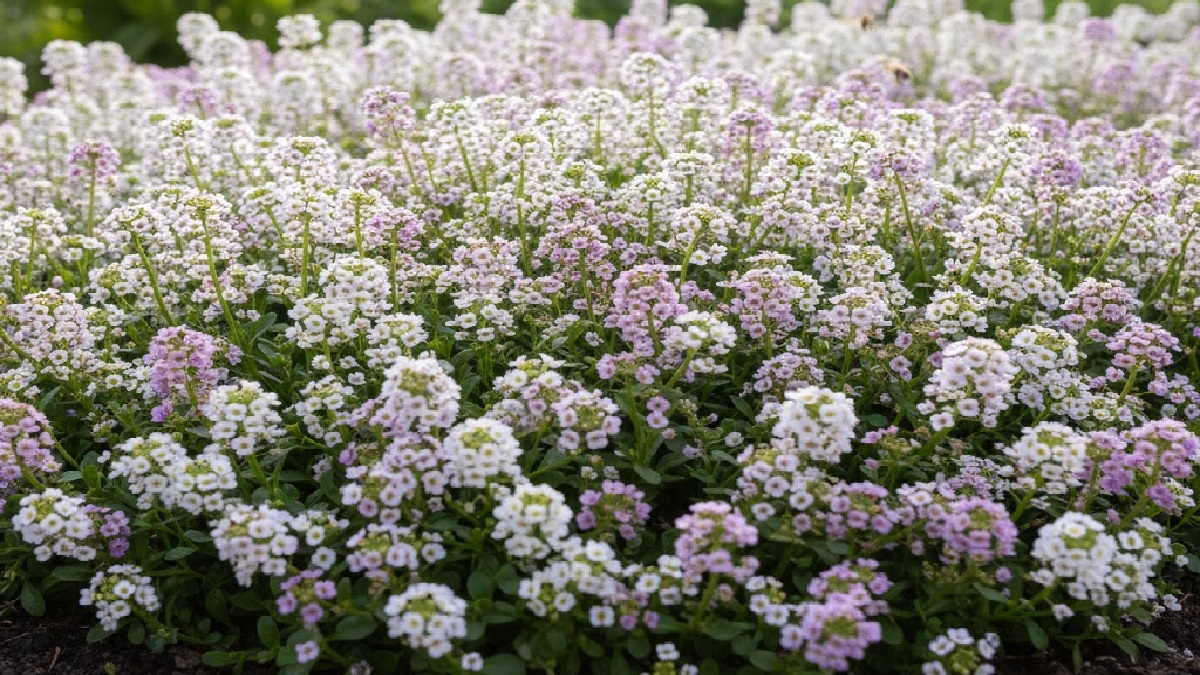
Key care tips for growing sweet alyssum include planting in well-draining soil and choosing a location with full sun that can tolerate some shade. Water the plants about an inch per week, increasing during dry periods. Regularly deadhead spent flowers to encourage continuous blooming.
Sweet alyssum thrives in full sun but struggles in extended dry conditions. In hot, dry regions, provide some afternoon shade to protect the plant. Ideally, it should receive six to eight hours of sunlight daily.
Sweet alyssum prefers moist, well-draining soil and is adaptable to a variety of locations, including sandy beaches, dunes, walls, slopes, and even sidewalk cracks. However, it performs poorly in waterlogged or poorly drained soil.
Water sweet alyssum with at least an inch of water per week, increasing the frequency during hot or dry periods. Ensure the soil drains well, and provide extra water if planting in fast-drying areas like stony landscapes.
Sweet alyssum can be grown year-round in temperate climates, though individual plants are short-lived. Established plants tolerate light frost, but young transplants are too tender to survive freezing temperatures.
In-ground sweet alyssum usually doesn't require fertilizer unless the soil is poor. Container-grown plants benefit from monthly feedings with a water-soluble, balanced fertilizer. When sowing seeds, mix in a slow-release fertilizer, and reapply after blooms fade to encourage new flowers. Avoid over-fertilizing, as this can produce excessive foliage at the expense of blooms.
Deadheading sweet alyssum promotes continuous flowering and encourages new bud formation. For large plantings, shearing back by one-third is an easier alternative to individual deadheading. Some varieties self-seed readily, and regular pruning helps prevent the plants from becoming leggy, keeping them neat and compact.
Sweet alyssum is easily propagated from seeds. Sow seeds directly in well-draining soil outdoors after the last frost, or start them indoors 6-8 weeks before the last expected frost. Lightly press the seeds into the soil without covering them completely, as they need light to germinate. Keep the soil consistently moist, and seedlings should emerge within 7-14 days. Some varieties also self-seed readily, allowing them to return the following year.
Sweet alyssum is easily grown from seed. Sow seeds on well-draining soil, lightly pressing them onto the surface without covering, as they need light to germinate. Keep the soil moist, and seedlings typically appear within 1-2 weeks. Some varieties self-seed and return the following year.
Sweet alyssum grows well in containers. Use high-quality potting soil and choose pots with drainage holes to prevent waterlogging. It works beautifully in hanging baskets or window boxes, alone or paired with plants like petunias. When transplanting, fill the container with soil, create a hole for the root ball, place the plant in it, and backfill, leaving about two inches between the soil surface and the pot's rim.
To overwinter sweet alyssum, you can cut it back and cover it with frost cloth, bring container plants indoors, or simply leave it in place. As alyssum self-seeds readily, in late winter or early spring, remove dead foliage to allow seeds from the previous season to reach the soil and germinate.
Sweet alyssum blooms best in cool temperatures, with peak flowering from June to October, and may bloom all summer in milder regions. Seeds typically take about two months to germinate, grow, and flower. The tiny clustered flowers, which can be white, pink, or purple, have a sweet, honey-like fragrance. Alyssum self-sows easily, providing bright colors year after year in suitable climates. To encourage new growth and extended blooming, apply a water-soluble fertilizer when flowers appear. Deadheading promotes more blooms, or alternatively, cutting the plant back by half in summer can stimulate fresh growth.
Sweet alyssum grows vigorously in warm climates, often needing little care to thrive. Outside ideal conditions-extreme heat, frost, excessive water, poor drainage, poor soil, or insufficient light-the plant may struggle. Intense heat can cause wilting, though some heat-tolerant cultivars handle it better. Ensure well-draining soil and provide extra water during hot spells. Wilting may improve in fall as temperatures drop, or you can cut back the plant by one-third, water, and feed with a water-soluble fertilizer to encourage new growth. Curling flowers and leaves may indicate cyclamen mite infestations, tiny sap-sucking pests best controlled with neem oil or insecticidal soap. Yellowing leaves can result from temperature spikes, transplant shock, insufficient water, or poor soil nutrients. Early identification of the cause is key-often, cutting back the plant and waiting for favorable conditions allows sweet alyssum to resume healthy growth.