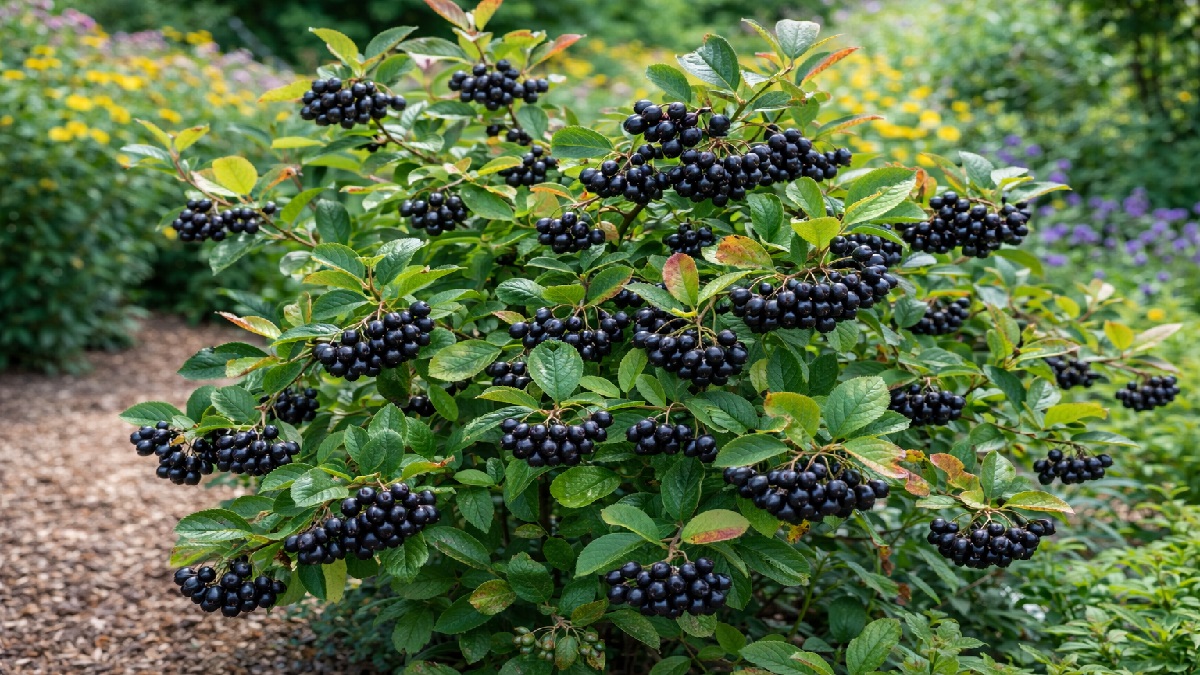
Black chokeberry (Aronia melanocarpa) is a hardy, low-maintenance shrub that thrives in full sun but tolerates partial shade. It grows well in most well-drained soils and prefers moderate watering, especially when establishing. Apply a balanced fertilizer in early spring if needed, and mulch to retain moisture and suppress weeds. Prune in late winter or early spring to remove dead or crowded branches. Resistant to pests and diseases, it produces white spring flowers, dark berries, and vibrant red fall foliage, making it an attractive, wildlife-friendly shrub for gardens and landscapes.
Black chokeberry (Aronia melanocarpa) grows best in full sun, which encourages abundant flowers, larger berries, and vibrant fall foliage. It can tolerate partial shade, but too much shade may reduce flowering, berry production, and the intensity of fall color. For optimal growth and ornamental value, plant in a sunny location.
Black chokeberry (Aronia melanocarpa) is highly adaptable to different soil types, including loamy, sandy, or clay soils. It prefers well-drained soil with moderate moisture and tolerates a range of pH levels from acidic to slightly alkaline. Good drainage is important to prevent root rot, but the plant is generally low-maintenance and resilient.
Black chokeberry (Aronia melanocarpa) prefers moderate watering, especially during its first growing season to establish strong roots. Once established, it is drought-tolerant and can thrive with minimal supplemental watering, though occasional deep watering during prolonged dry periods helps maintain healthy growth and fruit production.
Black chokeberry (Aronia melanocarpa) is extremely cold-hardy, thriving in USDA Zones 3-8, and can tolerate harsh winters as well as warm summers. It grows well in a range of humidity levels and adapts to both dry and moderately humid conditions, making it suitable for most temperate climates.
Black chokeberry (Aronia melanocarpa) is a low-maintenance shrub that generally requires little fertilization. For best growth, apply a balanced, slow-release fertilizer or compost in early spring, especially if soil is poor or plant growth appears slow. Avoid over-fertilizing, as it can reduce berry production.
Black chokeberry (Aronia melanocarpa) benefits from annual pruning in late winter or early spring. Remove dead, damaged, or crowded branches to maintain shape, improve air circulation, and encourage new growth and berry production. Older shrubs can be rejuvenated by cutting a few of the oldest stems to the ground.
Black chokeberry (Aronia melanocarpa) can be propagated from seeds, softwood cuttings, or root suckers. Seeds should be stratified before planting, while cuttings and suckers can be rooted in well-drained soil during spring or early summer. Propagation is relatively easy, allowing gardeners to expand their landscape or share plants.
To grow Black chokeberry (Aronia melanocarpa) from seed, first stratify the seeds by keeping them in a moist, cold environment for 60-90 days to break dormancy. Sow the seeds in well-drained soil in spring, keep them evenly moist, and provide bright, indirect sunlight. Seed-grown plants may take 2-3 years to produce flowers and berries.
Black chokeberry (Aronia melanocarpa) can be grown in large containers, though it prefers in-ground planting for full growth. Use a well-drained potting mix, and choose a container at least 18-24 inches wide. Repot every 2-3 years or when roots become crowded, pruning any overly long roots and refreshing the soil to support healthy growth and berry production.
Black chokeberry (Aronia melanocarpa) is extremely cold-hardy and generally requires little winter protection in USDA Zones 3-8. In colder regions or for container-grown plants, mulch around the base to insulate roots and consider moving pots to a sheltered location to prevent freeze damage.
To encourage Black chokeberry (Aronia melanocarpa) to bloom, plant it in full sun, as adequate sunlight promotes flower and berry production. Ensure the shrub has well-drained soil, receives moderate watering, and prune lightly in late winter or early spring to remove old or crowded branches, which stimulates new growth and flowering. Minimal fertilization with a balanced fertilizer in early spring can also support healthy blooms.
Black chokeberry (Aronia melanocarpa) is generally low-maintenance and highly resistant to pests and diseases. Occasionally, it may experience minor issues such as leaf spot, powdery mildew, or aphid infestations. Proper spacing, pruning, and good air circulation help prevent fungal problems, while healthy soil and regular watering reduce stress-related issues. Overall, it is a resilient shrub with few serious problems, making it ideal for low-maintenance gardens and wildlife-friendly landscapes.