Growing & Caring for Ball Cactus (Parodia magnifica)
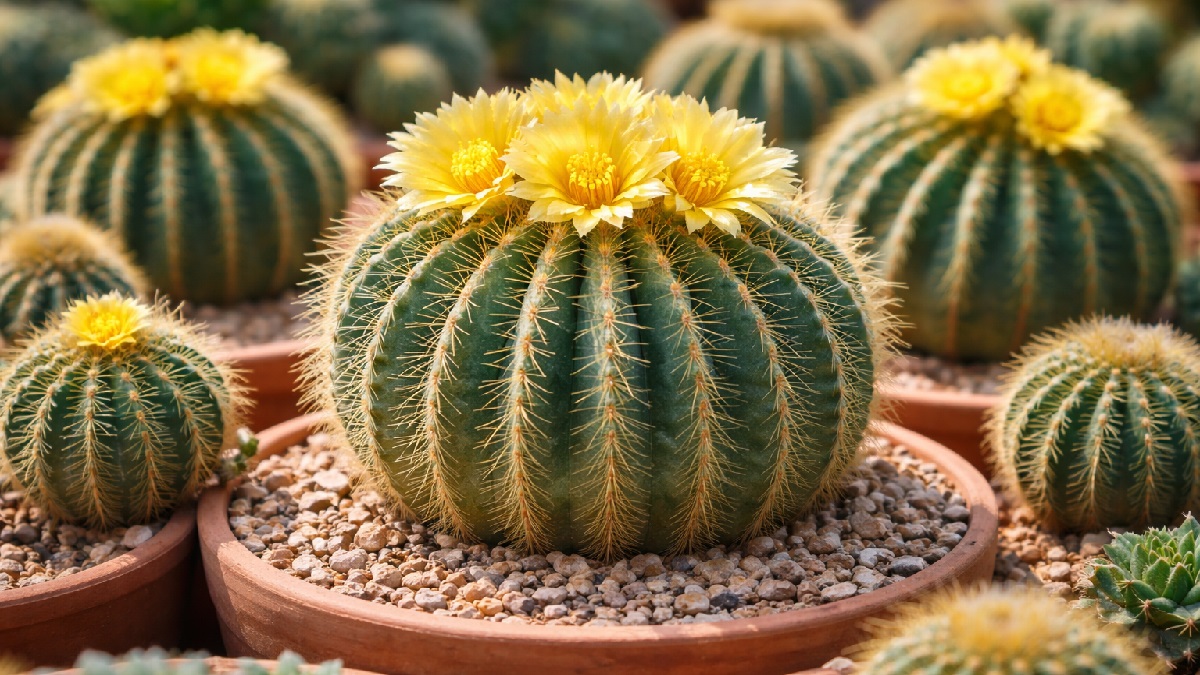
The Ball Cactus is a small, globe-shaped cactus admired for its neat symmetry and striking appearance. Native to South America, especially regions of Brazil, it features a rounded body with prominent vertical ribs lined with clusters of fine, golden-yellow spines. As the plant matures, it can slowly elongate into a short column, but it typically retains its compact, ball-like form, making it a popular choice for indoor plant collections and desert-themed gardens.
One of the most appealing features of the Ball Cactus is its ability to produce bright, cheerful flowers. During the growing season, it may bloom with vibrant yellow blossoms that form a crown-like ring at the top of the plant. These flowers create a beautiful contrast against the cactus’s green body and golden spines. It thrives in bright sunlight, well-draining soil, and requires minimal watering, making it ideal for beginners or anyone looking for a low-maintenance plant.
In terms of care, the Ball Cactus prefers warm temperatures and should be protected from frost. Overwatering is the most common issue, so allowing the soil to dry out completely between waterings is essential. With proper care, this cactus can live for many years, slowly growing and occasionally producing offsets, which can be propagated to grow new plants.
Caring for a Ball Cactus is simple once you understand its desert-like needs. This hardy cactus thrives in bright, sunny conditions, so place it near a south- or west-facing window where it can receive plenty of direct sunlight. Outdoors, it does well in full sun to partial shade. If grown indoors with low light, it may become stretched or lose its compact shape.
Watering is the most important aspect of care. Like most cacti, the Ball Cactus prefers a “soak and dry” method—water thoroughly, then allow the soil to dry out completely before watering again. During the growing season (spring and summer), you can water more frequently, but in winter, reduce watering significantly as the plant enters dormancy. Always use well-draining cactus or succulent soil to prevent root rot, and ensure the pot has drainage holes.
Temperature and humidity also play a role in keeping your cactus healthy. It prefers warm temperatures between 20–30°C and should be protected from frost or temperatures below 10°C. Fertilize lightly during the growing season with a diluted cactus fertilizer to support growth and flowering. With proper care, your Ball Cactus will remain compact, healthy, and may reward you with bright yellow blooms year after year.
The Ball Cactus thrives in bright, direct sunlight and performs best when placed in a sunny spot such as a south- or west-facing window. It ideally needs at least 4–6 hours of direct sun daily to maintain its compact, rounded shape and encourage flowering. While it can tolerate partial light, insufficient sunlight may cause the cactus to stretch (become leggy) and lose its vibrant appearance. If moving it outdoors, introduce it gradually to full sun to prevent sunburn.
The Ball Cactus requires well-draining, sandy soil to prevent excess moisture from damaging its roots. A commercial cactus or succulent potting mix works best, as it is specifically formulated to allow quick drainage and proper aeration. You can also create your own mix by combining regular potting soil with coarse sand, perlite, or pumice to improve drainage. Avoid heavy, clay-rich soils that retain water, as they can lead to root rot. Ensuring the pot has drainage holes is equally important to keep the soil dry and the plant healthy.
The Ball Cactus prefers a careful watering routine based on the “soak and dry” method. Water the plant thoroughly until excess drains out from the bottom, then allow the soil to dry out completely before watering again. During the active growing season (spring and summer), this may mean watering every 1–2 weeks depending on temperature and humidity, while in winter, watering should be reduced to once every few weeks or even less. Overwatering is the biggest risk, as it can quickly lead to root rot, so it’s always better to underwater than keep the soil constantly moist.
The Ball Cactus thrives in warm, dry conditions typical of its native habitat. It prefers temperatures between 20–30°C and can tolerate slightly higher heat if given adequate airflow and sunlight. However, it is not frost-tolerant and should be protected from temperatures below 10°C, as cold conditions can damage or kill the plant. In terms of humidity, it does best in low to moderate levels and does not require extra humidity—normal indoor air is usually sufficient. High humidity should be avoided, as it can increase the risk of fungal issues and root rot.
The Ball Cactus benefits from light feeding during its active growing season in spring and summer. Use a balanced, water-soluble cactus or succulent fertilizer diluted to half strength, and apply it once every 4–6 weeks. This helps support healthy growth and encourages flowering. Avoid fertilizing in autumn and winter when the plant enters dormancy, as excess nutrients during this period can harm the roots. Always apply fertilizer to moist soil to prevent root burn and keep feeding minimal, as cacti naturally require only small amounts of nutrients.
The Ball Cactus requires very little pruning due to its naturally compact growth habit. Pruning is generally limited to removing any dead, damaged, or diseased parts using clean, sharp tools to prevent infection. If the cactus produces offsets (pups), they can be gently separated and propagated rather than pruned for shape. Always handle the plant carefully or use gloves to avoid injury from its spines, and avoid excessive cutting, as this can stress the plant and slow its growth.
The Ball Cactus is most commonly propagated through offsets (also called pups) that grow around the base of a mature plant. To propagate, gently remove a healthy offset using clean hands or a sterilized tool, then allow it to dry for a few days so the cut end forms a callus—this helps prevent rot. Once dried, place the offset in well-draining cactus soil and keep it in a warm, bright location with indirect sunlight. Water lightly only after a week or when the soil is completely dry.
Propagation can also be done from seeds, though this method is slower and requires more patience. Seeds should be sown on the surface of a moist, well-draining mix and kept in warm conditions with indirect light until they germinate. Whether using offsets or seeds, maintaining proper drainage and avoiding overwatering are key to successful propagation.
Growing the Ball Cactus from seed is a slow but rewarding process that requires warmth, patience, and consistent care. Start by filling a shallow container with a well-draining cactus mix, lightly moistening the soil before sowing. Scatter the tiny seeds evenly on the surface without burying them, as they need light to germinate. Cover the container with a clear lid or plastic wrap to maintain humidity and place it in a warm spot with bright, indirect light. Ideal temperatures for germination are around 20–25°C.
Keep the soil slightly moist (not wet) by misting gently when needed, and ensure good airflow by occasionally removing the cover to prevent mold. Germination can take a few weeks, after which you can gradually remove the cover to acclimate the seedlings to normal conditions. As they grow, provide more light and allow the soil to dry slightly between waterings. Once the seedlings are large enough to handle, they can be carefully transplanted into individual pots with well-draining soil, where they will continue to develop into mature cacti over time.
The Ball Cactus prefers snug conditions, so it doesn’t need frequent repotting. Choose a pot with good drainage holes and use a well-draining cactus or succulent mix to prevent water retention. Terracotta pots are ideal because they allow excess moisture to evaporate more easily. When potting, ensure the plant sits at the same depth as before and avoid burying the base, as this can lead to rot.
Repotting is typically needed every 2–3 years or when the cactus outgrows its container or the soil becomes compacted. The best time to repot is during spring or early summer, when the plant is actively growing. Gently remove the cactus, shake off old soil, and check for any damaged roots before placing it in fresh soil. After repotting, wait about a week before watering to allow any disturbed roots to heal, reducing the risk of rot.
The Ball Cactus requires a dry, cool resting period during winter to stay healthy and encourage future flowering. Keep the plant in a bright location with plenty of indirect sunlight, but reduce watering significantly—only water lightly once every few weeks or when the soil is completely dry. Maintaining cooler temperatures around 10–15°C helps the cactus enter dormancy, which is important for its natural growth cycle.
Avoid exposing the plant to frost or temperatures below 10°C, as it is not cold-hardy and can suffer damage. Also, stop fertilizing during this period since the plant is not actively growing. Keeping humidity low and ensuring good air circulation will help prevent fungal issues. With proper overwintering care, the cactus will resume active growth and may produce blooms when warmer conditions return.
To encourage blooms on the Ball Cactus, you need to recreate its natural growth cycle with the right balance of light, temperature, and rest. The most important factor is providing plenty of bright, direct sunlight—at least 4–6 hours daily—during the growing season. Adequate light helps the plant store energy needed for flower production.
A proper winter dormancy is equally essential for blooming. Keep the cactus in a cooler environment (around 10–15°C), reduce watering significantly, and stop fertilizing during this period. This rest phase signals the plant to prepare for flowering. When spring arrives, gradually resume watering and feeding with a diluted cactus fertilizer to support bud development.
Consistency is key—avoid sudden changes in environment, overwatering, or low light, as these can prevent blooming. With the right care and patience, a mature Ball Cactus can reward you with bright yellow, crown-like flowers during its active season.
The Ball Cactus is generally hardy, but it can still face a few common pests and problems, especially if growing conditions aren’t ideal. Mealybugs and spider mites are the most frequent pests, often hiding in the ribs or around the base. They can be treated by wiping the plant with a cotton swab dipped in alcohol or using a mild insecticidal soap. Good airflow and regular inspection help prevent infestations.
The most serious issue is root rot, usually caused by overwatering or poorly draining soil. Signs include a soft, mushy base or discoloration. To prevent this, always let the soil dry completely between waterings and use a well-draining mix. Fungal diseases can also occur in high humidity or when water sits on the plant for too long, so keeping the cactus dry and in a well-ventilated space is important.
Other problems include sunburn (from sudden exposure to intense sunlight), which causes pale or brown patches, and etiolation (stretching) due to insufficient light. Maintaining consistent care—proper light, minimal watering, and good drainage—will keep the plant healthy and free from most issues.
Related Guides
Ball Cactus FAQs
How often should I water a Ball Cactus?
Water your Ball Cactus using the “soak and dry” method. During spring and summer, water every 1–2 weeks after the soil dries out completely. In winter, reduce watering to once every few weeks.
How much sunlight does a Ball Cactus need?
Ball Cactus needs at least 4–6 hours of bright, direct sunlight daily. A south- or west-facing window is ideal for maintaining its compact shape and encouraging blooms.
Why is my Ball Cactus not blooming?
Lack of sunlight or improper winter dormancy is the most common reason. Ensure bright light during the growing season and provide a cool, dry rest period in winter to encourage flowering.
What type of soil is best for Ball Cactus?
Use a well-draining cactus or succulent mix. You can also improve drainage by adding sand, perlite, or pumice to regular potting soil.
Can Ball Cactus be grown indoors?
Yes, Ball Cactus grows well indoors if placed in a bright, sunny location. Ensure good airflow and avoid overwatering to keep the plant healthy.
How do I propagate Ball Cactus?
Ball Cactus can be propagated using offsets (pups). Remove a healthy offset, let it dry for a few days, then plant it in well-draining soil. It can also be grown from seeds, though this method is slower.