Growing and Caring for Autumn Blaze Maple Tree (Acer × freemanii)
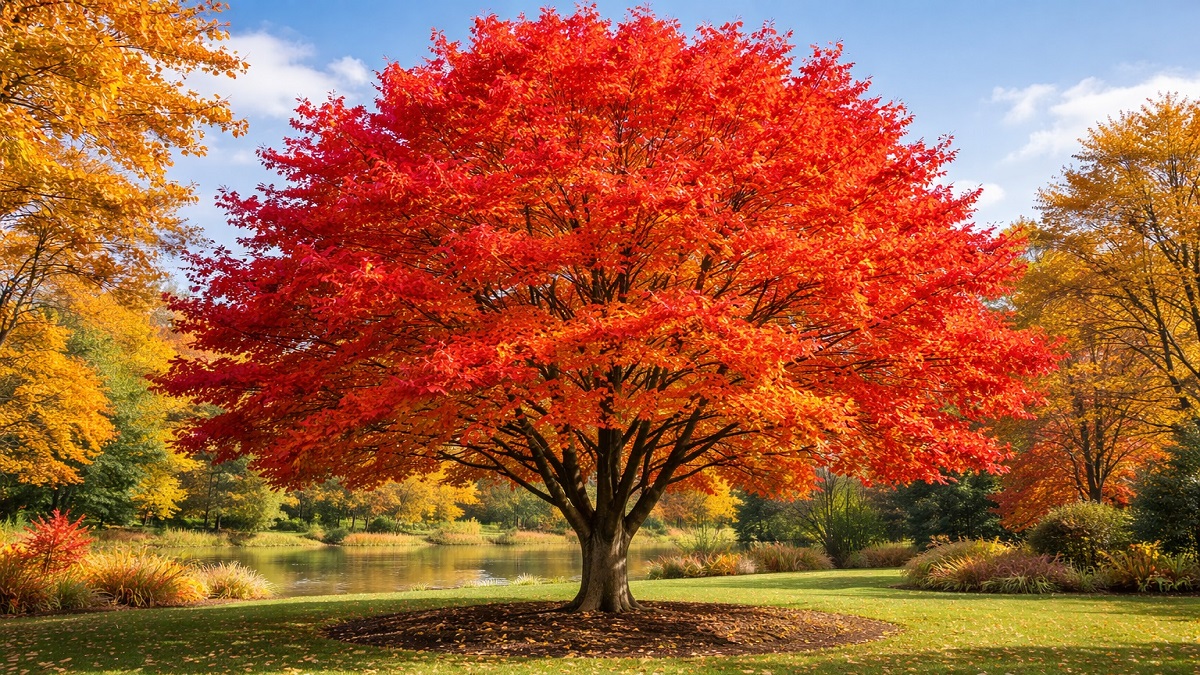
Autumn Blaze Maple Tree with vibrant orange-red fall foliage in a landscaped garden
Autumn Blaze Maple thrives in well-drained soil and full sun.

Autumn Blaze Maple (Acer × freemanii) is a fast-growing hybrid maple tree renowned for its stunning orange-red fall foliage, straight trunk, and strong branch structure. This deciduous tree typically reaches 40-50 feet in height with a canopy spread of 30-40 feet, making it an excellent choice for shade, street, and ornamental landscaping. Its rapid growth rate allows it to establish quickly in new landscapes, while its tolerance for urban conditions—including air pollution, heat, and variable soil types—makes it a popular choice for city streets and suburban yards. The tree produces greenish-yellow flowers in early spring, which develop into winged seeds, known as samaras, that add ornamental interest in late spring. Autumn Blaze Maple is highly resilient, demonstrating resistance to many common pests and diseases that affect other maple varieties.

Care
Autumn Blaze Maple is low-maintenance once established, but young trees require consistent attention during the first 2-3 years. Water deeply and regularly to promote strong root development, particularly in sandy or fast-draining soils. Apply a 2-3 inch layer of mulch around the base to maintain soil moisture, regulate temperature, and suppress weeds. Fertilize sparingly with a balanced, slow-release fertilizer in early spring to support healthy growth. Prune annually to remove dead, damaged, or crossing branches, as well as to maintain a strong central leader, which helps prevent structural weaknesses as the tree matures. Monitoring for pests such as aphids or leaf hoppers, as well as signs of fungal infection, can prevent long-term damage.
Light
Autumn Blaze Maple thrives in full sun, which promotes maximum leaf coloration in the fall and encourages dense, uniform growth. While it tolerates partial shade, insufficient sunlight can reduce the vibrancy of its autumn foliage and slow overall growth. For optimal performance and ornamental value, plant in a location that receives at least 6-8 hours of direct sunlight daily. Adequate sunlight also strengthens the tree's overall structure and supports photosynthesis for robust seasonal growth.
Soil Requirement
Autumn Blaze Maple adapts to a variety of soil types, including loamy, sandy, or moderately clay soils, provided the soil is well-drained. It prefers slightly acidic to neutral pH, ideally between 6.0 and 7.0. Poor drainage can lead to root rot, so planting on a slope or using raised beds may be beneficial in heavy clay soils. Organic matter such as compost can improve soil texture, enhance moisture retention, and provide essential nutrients for vigorous growth.
Watering
During establishment, water Autumn Blaze Maple deeply and consistently to encourage a strong, extensive root system. Newly planted trees typically require 1-2 inches of water per week, either from rainfall or supplemental irrigation. Mature trees are moderately drought-tolerant but benefit from occasional deep watering during prolonged dry periods to maintain healthy foliage, vibrant fall color, and overall vigor. Avoid frequent shallow watering, which encourages weak, surface roots.
Temperature & Humidity
This hybrid maple thrives in USDA Zones 3-8 and can tolerate both cold winters and warm summers. Autumn Blaze Maple adapts to varying humidity levels, from moderate to high, and is well-suited to urban microclimates. Although resilient, young trees benefit from wind protection during establishment, and occasional monitoring is advised during extreme heat or drought conditions to prevent stress.
Fertilizer
Fertilize in early spring using a balanced, slow-release fertilizer to support steady growth and vibrant foliage. For soils rich in organic matter, fertilization may not be necessary every year. Over-fertilizing can lead to overly rapid, weak growth that is susceptible to breakage. Incorporating compost or well-rotted manure into the root zone in early spring can also supply essential nutrients naturally.
Pruning
Annual pruning is essential to remove dead, damaged, or crossing branches and to maintain a strong central leader. Proper pruning improves air circulation, reduces disease risk, and enhances overall tree structure. Structural pruning should be performed in late winter or early spring, prior to leaf emergence. Avoid heavy pruning during summer, as it can stress the tree and reduce fall color intensity.
Propagation
Autumn Blaze Maple is primarily propagated through grafting onto rootstock, ensuring uniform growth and desirable traits. While seed propagation is possible, it is uncommon due to slower growth rates and variability in offspring characteristics. Nursery-grown saplings are recommended for reliable establishment and consistent growth performance. Propagated trees require similar care to established plants, with attention to root protection and watering during the first year.

Related Guides

Autumn Blaze Maple Tree FAQs

Frequently Asked Questions About Autumn Blaze Maple Tree

Is Autumn Blaze Maple easy to grow?

Yes, Autumn Blaze Maple is fast-growing, hardy, and highly adaptable. It performs well in various soil types, tolerates urban pollution, and establishes quickly with proper watering and care.

How much sunlight does it need?

For optimal vibrant fall foliage, full sun is ideal. Partial shade is tolerated, but limited sunlight may reduce leaf coloration and overall growth vigor.

How often should it be watered?

Newly planted trees require regular, deep watering to establish a strong root system. Once mature, the tree is moderately drought-tolerant but benefits from supplemental deep watering during prolonged dry spells, which helps maintain vibrant foliage and healthy growth.

Is Autumn Blaze Maple cold-hardy?

Yes, Autumn Blaze Maple tolerates cold climates well and thrives in USDA Zones 3-8. Young trees may need some protection during extreme winters, such as mulching around the root zone.

How tall does it grow?

This hybrid maple typically reaches 40-50 feet in height with a spread of 30-40 feet, creating a broad, shaded canopy ideal for landscaping and street planting.