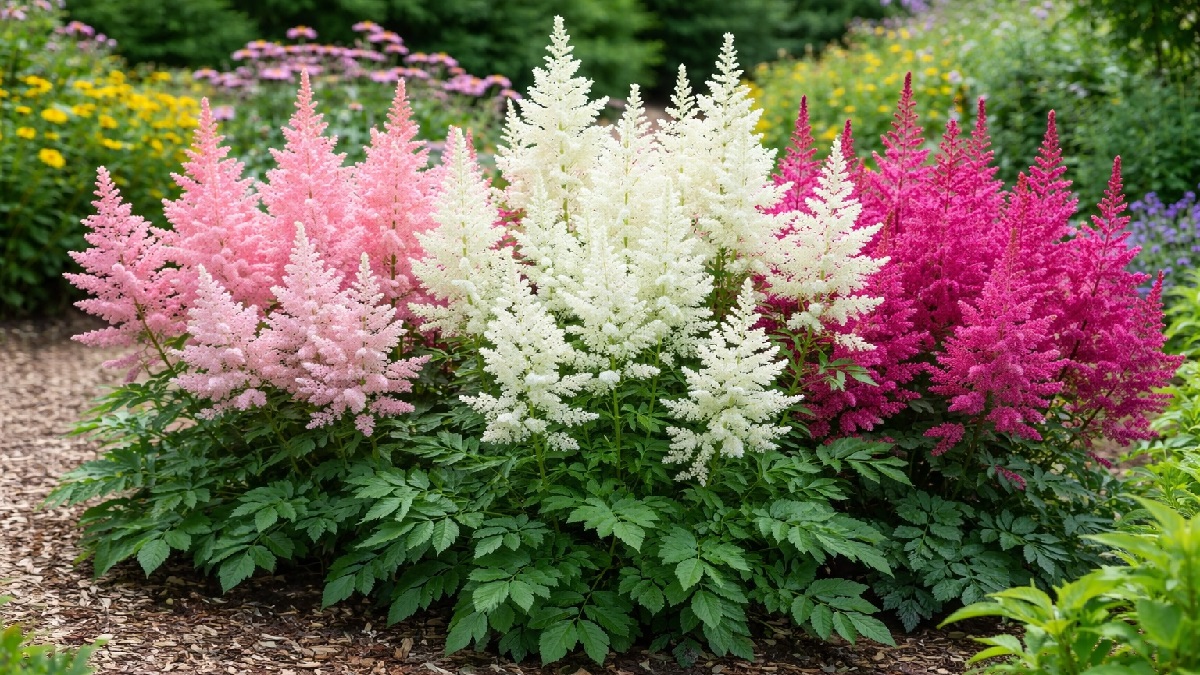
Astilbe is a low-maintenance, shade-loving perennial that thrives in consistently moist, well-drained soil. It prefers partial to full shade, as too much direct sunlight can scorch the delicate foliage. Regular watering is essential, especially during hot, dry periods, to keep the soil evenly moist. Apply a balanced fertilizer in spring to promote healthy foliage and vibrant blooms. Deadhead spent flowers to encourage tidier growth and, after the growing season, cut back the foliage to the ground in late fall. Mulching helps retain moisture, suppress weeds, and protect roots during winter. With proper care, astilbe provides lush foliage and striking flower plumes year after year.
Astilbe thrives in partial to full shade, making it ideal for woodland gardens or shaded borders. While it can tolerate some morning sun, direct, intense sunlight, especially in the afternoon, can scorch the delicate foliage and reduce flowering.
Astilbe prefers moist, well-drained soil that is rich in organic matter. Loamy or slightly acidic soils work best, as they retain moisture without becoming waterlogged. Adding compost or aged mulch improves fertility and helps keep the roots cool and consistently moist.
Astilbe requires consistently moist soil to thrive, as it does not tolerate drought well. Water regularly, especially during hot, dry periods, to keep the soil evenly moist but not waterlogged. Mulching around the base helps retain moisture, regulate soil temperature, and reduce the need for frequent watering.
Astilbe thrives in cool to moderate temperatures and prefers moderate to high humidity. It grows best in USDA zones 3-8. High heat combined with low humidity can stress the plant and cause foliage scorch, so providing shade and consistent soil moisture helps keep astilbe healthy in warmer climates. Mulching also helps regulate soil temperature and retain moisture.
Astilbe benefits from regular feeding to support lush foliage and vibrant flower plumes. Apply a balanced, slow-release fertilizer in early spring as new growth begins, and consider a light liquid fertilizer during the growing season to boost blooming. Avoid over-fertilizing, which can lead to excessive leaf growth at the expense of flowers. Incorporating organic matter or compost into the soil also improves fertility and moisture retention.
Astilbe requires minimal pruning. After flowering, deadhead spent flower plumes to maintain a tidy appearance and encourage healthier growth. In late fall or early winter, cut back the foliage to the ground to prepare the plant for dormancy and make way for fresh growth in spring. Light pruning also helps prevent disease by removing damaged or yellowing leaves.
Astilbe is most commonly propagated through division, which is quick and reliable. Mature plants can be dug up in early spring or fall and carefully separated into smaller clumps, each with roots and shoots, then replanted in well-prepared soil. This method ensures healthy, vigorous new plants that will bloom faster than seed-grown plants. While astilbe can be grown from seeds, division is preferred for maintaining the characteristics of the parent plant and achieving earlier flowering.
Astilbe can be grown from seeds, but this method is slow and less common. Sow seeds indoors in a well-draining seed-starting mix and keep them consistently moist at cool to moderate temperatures. Germination can take several weeks, and seedlings may require 1-2 years to reach flowering size. Because of this slow process, most gardeners prefer propagation by division, which produces mature, flowering plants much faster.
Astilbe can be grown in containers using well-draining, fertile soil rich in organic matter. Choose a pot deep enough to accommodate the root system and allow room for growth. Repotting is typically needed every 2-3 years or when the plant becomes root-bound. The best time to repot is in early spring, before new growth begins. When repotting, gently loosen the roots, refresh the soil, and water thoroughly to help the plant establish quickly in its new container.
Astilbe is cold-hardy but benefits from some protection in harsh winters. In late fall, cut back the foliage to the ground and apply a thick layer of mulch to insulate the crowns from freezing temperatures. For container-grown plants, move them to a cool, sheltered location or indoors during winter. Proper overwintering helps the plant emerge healthy and vigorous in spring.
To encourage astilbe to bloom abundantly, plant it in partial to full shade with consistently moist, fertile soil. Apply a balanced fertilizer in early spring to support healthy foliage and vibrant flower plumes. Deadhead spent flowers to prolong blooming, and ensure the plant receives enough water, especially during dry periods. Pinching back young stems in early summer can promote bushier growth and more flower spikes, while proper spacing and good air circulation help the plant focus energy on producing abundant, colorful blooms.
Astilbe is generally low-maintenance but can face some pests, diseases, and other issues. Common pests include aphids, slugs, and spider mites, which may damage foliage or flower spikes. Fungal diseases such as powdery mildew, leaf spot, and root rot can occur in poorly drained soil or areas with poor air circulation. Other problems include yellowing leaves from drought, nutrient deficiency, or overcrowding. Most issues can be prevented with consistent watering, proper spacing, good drainage, mulching, and occasional fertilization, ensuring healthy plants with vibrant foliage and abundant blooms.