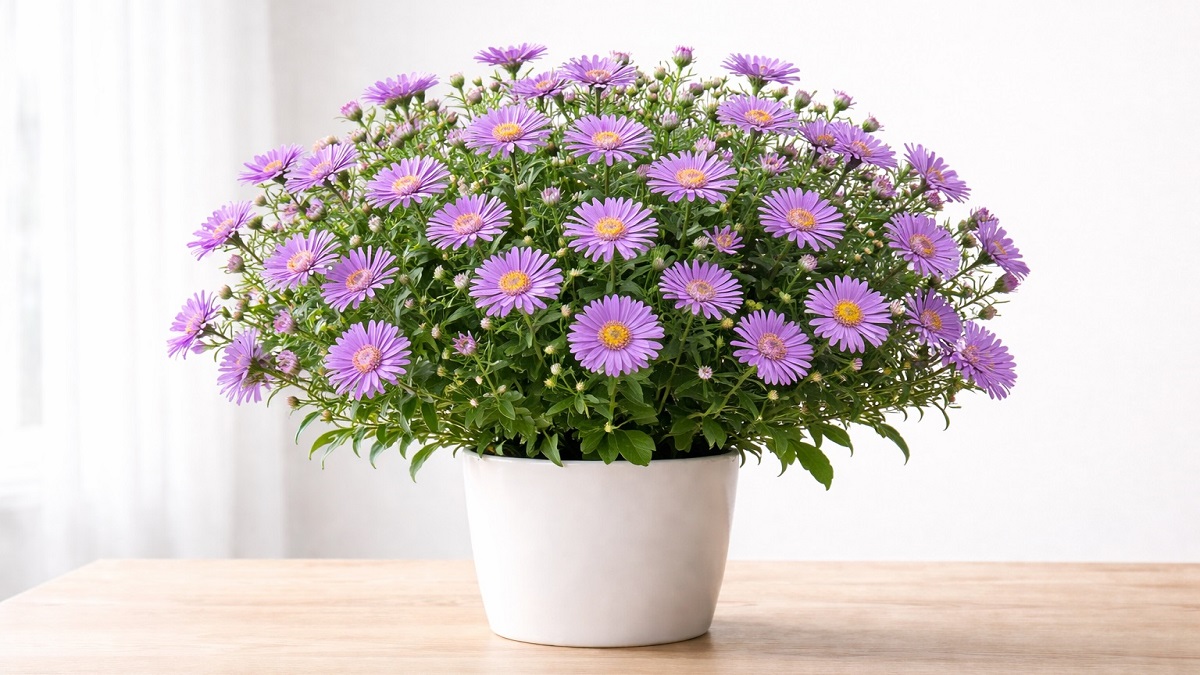
Asters are relatively easy to grow and maintain but thrive best with proper care. They prefer full sun for abundant flowering and well-drained, fertile soil. Regular watering keeps the soil evenly moist, especially during dry periods, but avoid waterlogging. Applying a balanced fertilizer in early spring promotes healthy growth and vibrant blooms. To maintain a tidy shape and prevent legginess, pinch back stems in early summer and remove faded flowers (deadheading) to encourage prolonged blooming. Providing good air circulation helps reduce the risk of fungal diseases like powdery mildew.
Asters grow best in full sun, receiving at least 6 hours of direct sunlight daily. Adequate sunlight ensures dense, bushy growth and abundant, vibrant blooms. Some varieties can tolerate partial shade, but too little light may result in fewer flowers and leggier plants.
Asters prefer well-drained, fertile soil rich in organic matter. They thrive in loamy soil but can adapt to sandy or clay soils if drainage is good. A slightly acidic to neutral pH (6.0-7.0) is ideal for healthy growth and abundant flowering.
Asters need regular watering, especially during dry periods, to keep the soil evenly moist. Avoid overwatering, as soggy soil can lead to root rot and fungal diseases. Mulching around the base helps retain moisture and keeps the roots cool, promoting healthy, vigorous growth.
Asters thrive in moderate temperatures and are hardy in USDA zones 3-8. They prefer cool to warm climates and moderate humidity. Excessive humidity combined with poor air circulation can lead to fungal diseases like powdery mildew, so planting in well-ventilated areas helps keep the plants healthy.
Asters benefit from moderate fertilization to support healthy growth and abundant blooms. Apply a balanced, slow-release fertilizer in early spring as new growth begins. Light feeding during the growing season with a water-soluble fertilizer can also help promote more vibrant flowers. Avoid over-fertilizing, which can lead to lush foliage but fewer blooms.
Asters benefit from regular pruning to maintain a tidy shape and encourage bushy growth. Pinch back the stems in early summer when plants are 6-8 inches tall to promote branching and more flowers. After flowering, deadhead spent blooms to extend the flowering period and prevent self-seeding. Cut back the foliage to the ground in late fall or early winter to prepare the plant for the next growing season.
Asters can be propagated easily through division or stem cuttings. Division is the quickest method: mature plants are dug up in early spring or fall, and the root clumps are carefully separated before replanting in well-prepared soil, producing strong, established plants. Alternatively, softwood stem cuttings taken in late spring or early summer can be rooted in a moist, well-draining medium to grow new plants. Both methods are effective, with division providing faster results and earlier flowering.
Asters can also be grown from seeds, though this method takes longer to produce flowering plants. Sow seeds indoors 6-8 weeks before the last frost in a well-draining seed-starting mix, keeping the soil consistently moist and warm. Once seedlings develop several true leaves and the outdoor conditions are suitable, transplant them into the garden. Seed-grown asters may take a full season or more to bloom, but they allow gardeners to propagate a wide range of varieties and colors.
Asters can be grown in containers using well-draining, fertile soil. Choose a pot large enough to accommodate the plant's root system and provide drainage holes to prevent waterlogging. Repotting is typically needed every 1-2 years or when the plant becomes root-bound. The best time to repot is in early spring, before new growth begins. When repotting, gently loosen the roots, refresh the soil, and water well to help the plant establish quickly in its new container.
Asters are perennial plants that can survive winter in most climates, but they benefit from some protection in colder regions. In late fall, cut back the foliage to a few inches above the ground and apply a layer of mulch to insulate the roots from freezing temperatures. Container-grown asters should be moved to a cool, sheltered location or indoors during harsh winters. Proper overwintering ensures the plants emerge healthy and vigorous in spring.
To encourage asters to bloom abundantly, plant them in full sun with well-drained, fertile soil and ensure they receive regular watering during the growing season. Pinching back stems in early summer promotes bushier growth and more flower heads. Applying a balanced fertilizer in spring supports healthy foliage and vibrant blooms, while deadheading spent flowers extends the flowering period. Proper spacing and good air circulation also help prevent disease and allow the plant to focus energy on producing abundant, colorful flowers.
Asters are generally hardy but can be affected by several pests, diseases, and other problems. Common pests include aphids, spider mites, and leafhoppers, which can damage leaves and reduce flowering. Fungal diseases such as powdery mildew, rust, and leaf spot may occur in humid conditions or if air circulation is poor. Other issues include leggy growth from insufficient sunlight, weak flowering due to nutrient deficiencies, or overcrowding. Most problems can be prevented with proper spacing, adequate sunlight, regular watering, mulching, and occasional fertilization, ensuring healthy, vibrant plants and long-lasting blooms.