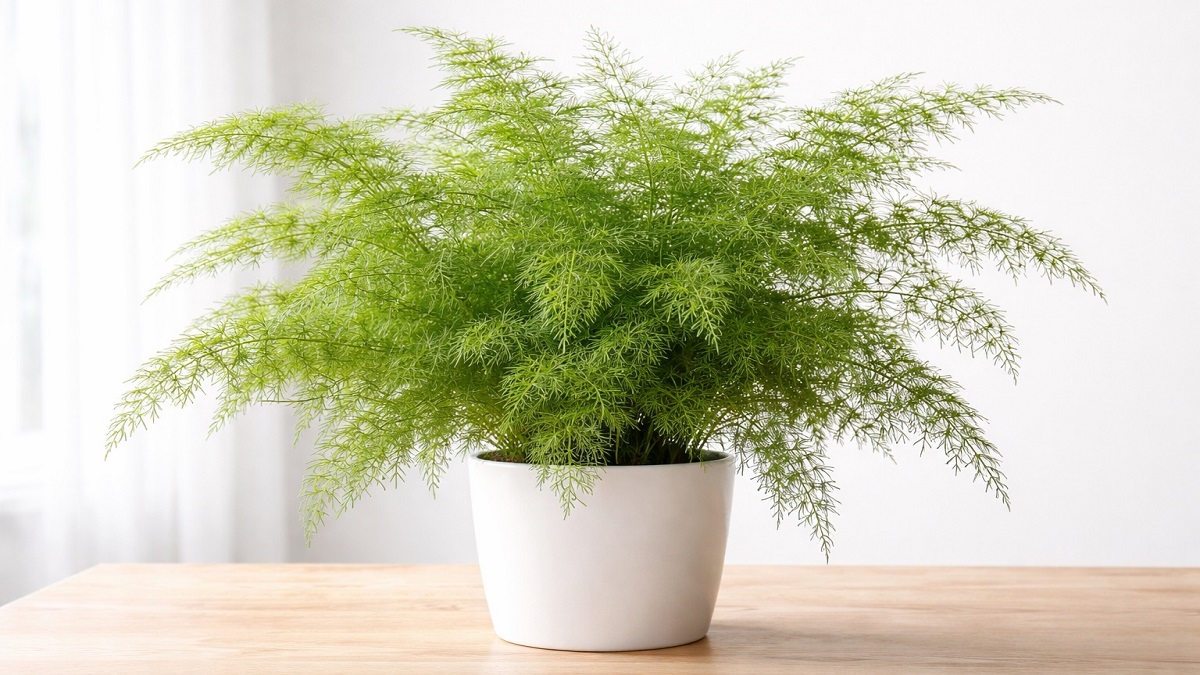
Asparagus fern is a low-maintenance, adaptable plant that thrives in a variety of conditions. It prefers bright, indirect light but can tolerate partial shade. Plant it in well-draining, fertile soil and water regularly, keeping the soil slightly moist but not soggy. The fern is relatively drought-tolerant once established. Feed monthly during the growing season with a balanced liquid fertilizer to encourage lush foliage. Prune lightly to remove yellowing or dead fronds and maintain shape. It can be grown outdoors in warm climates or as a houseplant in cooler regions, making it versatile and easy to care for.
Asparagus fern grows best in bright, indirect light. It can tolerate partial shade, but too little light may cause sparse, leggy growth. Direct, harsh sunlight can scorch the delicate fronds, so filtered light is ideal.
Asparagus fern prefers well-draining, fertile soil. A loamy or sandy potting mix enriched with organic matter works well, whether grown in the garden or in containers. Good drainage is essential to prevent root rot and promote healthy, lush foliage.
Asparagus fern prefers consistently moist soil but should never be waterlogged, as overwatering can cause root rot. Water regularly during the growing season, allowing the top inch of soil to dry slightly between waterings. In winter or dormant periods, reduce watering while still keeping the soil lightly moist.
Asparagus fern thrives in warm temperatures, ideally between 60-75°F (15-24°C). It prefers moderate to high humidity, which helps keep its delicate fronds lush and green. In dry indoor conditions, occasional misting or placing the plant near a humidity source can prevent browning of the foliage. It is not frost-tolerant, so protect it from cold drafts and freezing temperatures.
Asparagus fern benefits from regular feeding during the growing season. Apply a balanced, water-soluble fertilizer every 4-6 weeks in spring and summer to encourage lush, vibrant foliage. Reduce or stop fertilizing in fall and winter when the plant's growth slows. Over-fertilizing should be avoided, as it can burn the roots and damage the fronds.
Asparagus fern requires light pruning to maintain a tidy appearance and promote healthy growth. Remove yellow, brown, or dead fronds regularly, and trim back overgrown stems to control size and shape. Pruning can also encourage new, bushier growth, keeping the plant full and attractive.
Asparagus fern is commonly propagated through division or seeds, though division is faster and more reliable. For division, carefully separate a mature plant's root clumps in spring or early summer and replant them in well-draining soil. Seed propagation is possible when red berries are ripe, but it is slower, taking months to germinate and several years for plants to reach maturity. Division ensures quicker establishment and fuller growth.
Asparagus fern can be grown from seeds, but this method is slow and less common. Ripe red berries contain the seeds, which should be cleaned and sown in a well-draining seed mix. Keep the soil consistently moist and warm, with bright, indirect light. Germination can take several weeks to months, and seedlings may take 2-3 years to develop into mature, full plants. For faster results, propagation by division is generally preferred.
Asparagus fern grows well in containers with well-draining, fertile soil. Choose a pot that is slightly larger than the root ball, with drainage holes to prevent waterlogging. Repotting is typically needed every 2-3 years or when the plant becomes root-bound. The best time to repot is in spring, before new growth begins. When repotting, gently loosen the roots, trim any damaged ones, and refresh the soil to encourage healthy, vigorous growth.
Asparagus fern is not frost-tolerant and needs protection in cold climates. In winter, move container plants indoors to a bright, cool location, or cover outdoor plants to shield them from frost. Reduce watering during dormancy, keeping the soil just lightly moist. Allow the plant to rest naturally until temperatures warm up in spring, then resume regular care and feeding.
Asparagus fern produces small, fragrant white flowers that are followed by bright red berries, but flowering is more likely in mature plants under the right conditions. To encourage blooms, provide bright, indirect light, maintain moderate humidity, and fertilize regularly during the growing season. Healthy, well-established plants that are slightly root-bound and grown in warm conditions are most likely to flower. Note that some indoor plants may rarely bloom.
Asparagus fern is generally hardy and low-maintenance, but it can face some pests and problems. Common pests include spider mites, aphids, and mealybugs, which can damage fronds if infestations are severe. Overwatering or poor drainage can lead to root rot, while excessively dry conditions may cause fronds to brown or drop. Yellowing foliage can also result from nutrient deficiencies or insufficient light. Most issues can be prevented with proper watering, good air circulation, regular fertilization, and occasional pest inspections, keeping the plant healthy and lush.