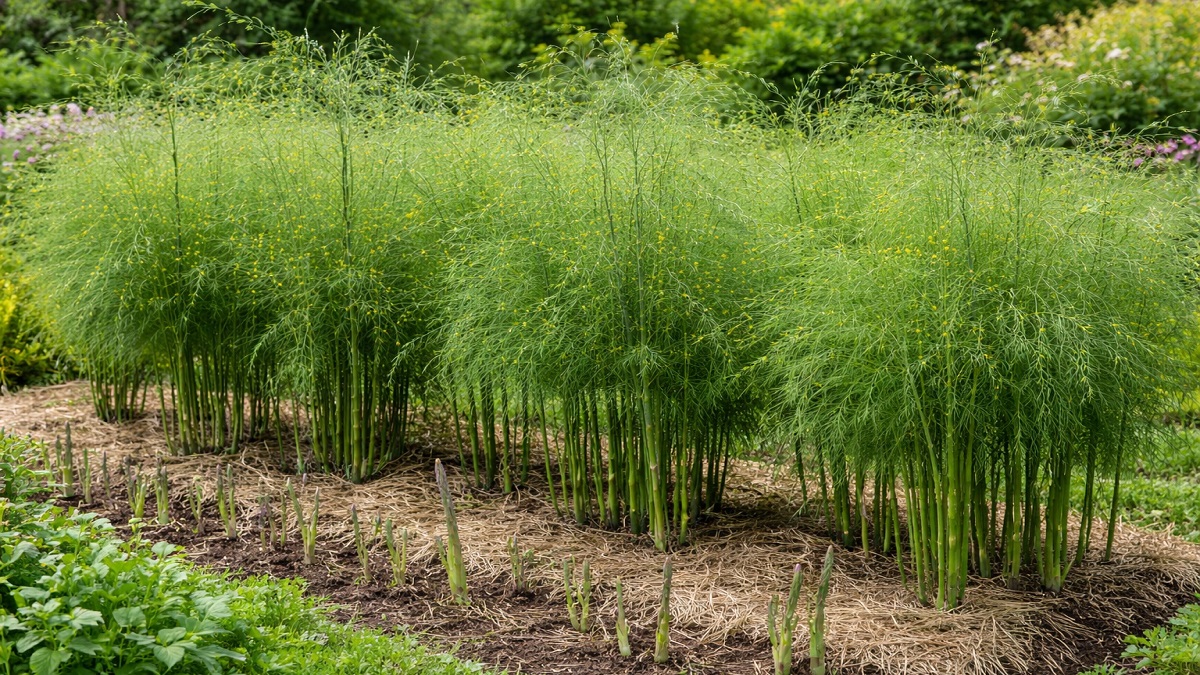
Asparagus is a hardy, long-lived perennial that requires full sun and well-drained, fertile soil for optimal growth. Water regularly, especially during the first few years, to help establish strong roots, but avoid waterlogging, which can cause crown rot. Mulching helps retain moisture, suppress weeds, and regulate soil temperature. Apply a balanced fertilizer in early spring and again after the harvest season to promote healthy growth. Harvest spears carefully once they reach 6-8 inches tall, and allow remaining foliage to grow and die back naturally, as it nourishes the crowns for the following year. With proper care, asparagus can produce for 15-20 years or more.
Asparagus grows best in full sun, needing at least 6-8 hours of direct sunlight daily. Adequate sunlight ensures strong spear production, healthy foliage, and long-term productivity.
Asparagus prefers sandy or loamy, well-drained soil that is rich in organic matter. Loose soil allows crowns to develop properly and supports healthy spear growth, while good drainage prevents root and crown rot. A slightly acidic to neutral pH (6.5-7.0) is ideal.
Asparagus requires consistent watering, especially during the first 1-2 years while crowns are establishing. Keep the soil evenly moist but not waterlogged, as overwatering can cause root rot. Once established, asparagus is fairly drought-tolerant, but regular watering during the growing and spear-producing season promotes tender, high-quality shoots. Mulching helps retain soil moisture.
Asparagus thrives in temperate to warm climates and is hardy in USDA zones 3-8. It prefers moderate humidity and performs best with cool winters for dormancy and warm springs for spear growth. Excessive humidity combined with poor drainage can increase the risk of fungal diseases, so well-ventilated soil and proper spacing are important for healthy plants.
Asparagus benefits from regular fertilization to support strong crown development and abundant spear production. Apply a balanced fertilizer or compost in early spring before spears emerge, and again after the harvest season to replenish nutrients. A fertilizer higher in phosphorus and potassium promotes healthy roots and vigorous growth, while avoiding excessive nitrogen helps prevent overly lush foliage at the expense of spear quality.
Asparagus requires minimal pruning. After the harvest season, allow the ferns (foliage) to grow fully, as they feed and strengthen the crowns for next year. In late fall or early winter, once the foliage turns yellow or brown, cut it back to the ground to keep the bed tidy and reduce the risk of pests and diseases.
Asparagus is commonly propagated through crowns (roots) or seeds. The fastest and most reliable method is planting 1-2-year-old crowns in early spring, which establishes productive plants within 2-3 years. Growing from seeds is possible but slower, taking 3-4 years before the first harvest. Crowns are planted in well-prepared, fertile soil, while seeds should be started indoors or in a warm, protected environment before transplanting.
Asparagus can be grown from seeds, but this method is slow and requires patience, as seedlings may take 3-4 years to produce harvestable spears. Sow seeds in well-draining, fertile soil or seed trays in a warm, sunny location. Keep the soil consistently moist and provide good light for strong germination. Once seedlings develop several true leaves and the roots are established, they can be transplanted into the garden in early spring. For faster harvests, planting crowns is usually preferred.
Asparagus can be grown in deep containers with well-draining, fertile soil, but it performs best in garden beds due to its large root system. Use a pot at least 12-18 inches deep to accommodate the crowns. Repotting is rarely needed, but if roots become crowded, transfer the plant to a larger container in early spring before new growth starts. Proper drainage and a nutrient-rich potting mix are essential to maintain healthy growth in containers.
Asparagus is cold-hardy and goes dormant in winter, but in areas with harsh winters or frost-prone regions, extra protection helps. Mulch heavily around crowns to insulate them from freezing temperatures. For container-grown plants, move them to a cool, frost-free location or indoors. After the growing season, allow the ferns to die back naturally, as this process stores energy in the crowns for vigorous growth in the following spring.
Asparagus naturally produces edible spears rather than showy flowers, but healthy spear production is linked to proper care. To encourage strong, productive growth, plant asparagus in full sun with well-drained, fertile soil, water consistently, and apply balanced fertilizer in spring and after harvest. Allow the foliage to grow fully after harvesting and die back naturally, as this nourishes the crowns for the next season. Proper spacing, mulching, and avoiding overharvesting also ensure vigorous, regular spear emergence each year.
Asparagus is generally hardy but can face some pests, diseases, and other problems. Common pests include asparagus beetles and aphids, which can damage spears and foliage. Fungal diseases such as fusarium crown rot, rust, and purple spot may occur in poorly drained or overly humid conditions. Other issues include weak or sparse spear production from overcrowded crowns, nutrient deficiencies, or improper harvesting. Most problems can be prevented with well-drained soil, proper spacing, regular fertilization, mulching, and timely harvesting, ensuring healthy, productive plants for many years.