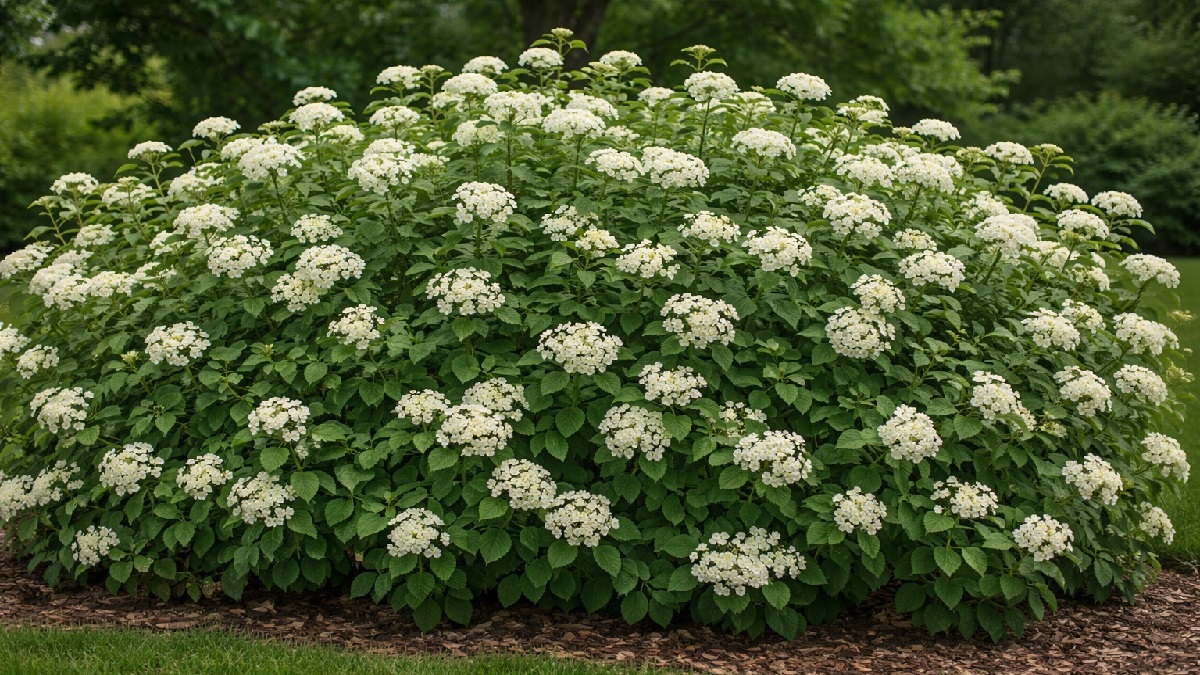
Arrowwood Viburnum is a low-maintenance shrub that thrives in full sun to partial shade and adapts to most well-drained soils. Water regularly during the first growing season to establish roots, then it becomes moderately drought-tolerant. Prune in late winter or early spring to maintain shape and remove dead or crowded branches. Fertilize in early spring with a balanced fertilizer if needed. Hardy and pest-resistant, it attracts birds and pollinators while providing seasonal interest with spring flowers, summer berries, and vibrant fall foliage.
Arrowwood Viburnum (Viburnum dentatum) grows best in full sun to partial shade. Full sun promotes abundant flowers, vibrant fall color, and berry production, while partial shade is tolerated but may slightly reduce flowering and fruiting.
Arrowwood Viburnum (Viburnum dentatum) adapts to a wide range of soils, including loamy, sandy, or clay soils. It prefers well-drained soil with moderate moisture and can tolerate slightly acidic to neutral pH levels. Good drainage is essential to prevent root rot.
Arrowwood Viburnum (Viburnum dentatum) requires regular watering, especially during its first growing season, to establish strong roots. Once established, it is moderately drought-tolerant but benefits from deep watering during prolonged dry periods to maintain healthy growth and berry production.
Arrowwood Viburnum (Viburnum dentatum) is cold-hardy and thrives in USDA Zones 2-8, tolerating harsh winters and warm summers. It grows well in a range of humidity levels and adapts to most temperate climates, making it suitable for many landscapes.
Arrowwood Viburnum (Viburnum dentatum) is low-maintenance and generally requires minimal fertilization. Apply a balanced, slow-release fertilizer or compost in early spring to support healthy growth, flowering, and berry production, especially in poor soils.
Arrowwood Viburnum (Viburnum dentatum) benefits from annual pruning in late winter or early spring. Remove dead, damaged, or crowded branches to maintain shape, improve air circulation, and encourage healthy growth and abundant flowers and berries.
Arrowwood Viburnum (Viburnum dentatum) can be propagated through softwood or semi-hardwood cuttings taken in late spring or early summer. Cuttings root easily in moist, well-draining soil and can be transplanted once established. This method helps expand your garden or create new shrubs for hedges and borders.
Arrowwood Viburnum (Viburnum dentatum) can be grown from seed, though it is slower than propagation by cuttings. Stratify seeds by keeping them in moist, cold conditions for several months before sowing in well-draining soil in spring. Germination may take several weeks, and seedlings can take a few years to flower and fruit.
Arrowwood Viburnum (Viburnum dentatum) can be grown in large containers, though it performs best in the ground. Use well-draining, nutrient-rich soil and a container with drainage holes. Repot every 2-3 years or when roots become crowded, refreshing the soil to support healthy growth and berry production.
Arrowwood Viburnum (Viburnum dentatum) is cold-hardy and generally requires little winter protection in USDA Zones 3-8. In colder regions or for container-grown plants, mulch around the base to insulate roots and protect from freeze damage.
Arrowwood Viburnum (Viburnum dentatum) produces abundant flowers when planted in full sun with well-drained soil. Regular watering, light fertilization in early spring, and pruning to remove old or crowded branches also encourage healthy blooms and berry production.
Arrowwood Viburnum (Viburnum dentatum) is generally resilient and low-maintenance but can occasionally face pests like aphids, viburnum leaf beetles, or scale insects. Fungal issues such as powdery mildew or leaf spot may occur in poorly ventilated or overly wet conditions. Proper spacing, pruning, and well-drained soil help prevent most problems, keeping the shrub healthy and productive.