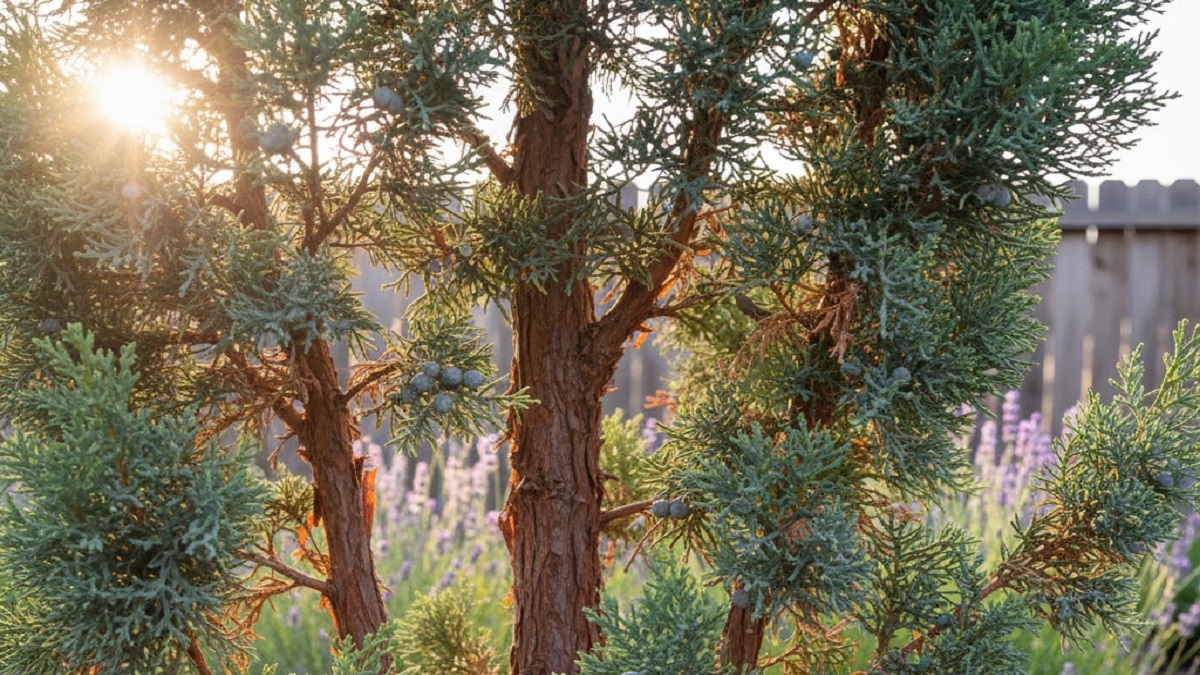
Arizona Cypress grows best in full sun and well-drained soil, thriving in dry to moderately moist conditions once established. Water young trees regularly during the first few years to help develop strong roots, then reduce watering as the tree becomes drought tolerant. It prefers loamy or sandy soil and adapts well to acidic, neutral, or alkaline conditions. Pruning is minimal and mainly needed to remove dead or damaged branches, while excessive watering or poorly drained soil should be avoided to prevent root problems.
Arizona Cypress requires full sun to grow at its best and should receive at least 6-8 hours of direct sunlight daily. Adequate sunlight promotes dense foliage, strong growth, and good overall health, while too much shade can result in sparse or weak growth.
Arizona cypress trees are adaptable to a wide range of soil pH levels, including acidic, neutral, and alkaline conditions, and can grow in clay, loam, or sandy soils, provided the soil drains well.
Arizona cypress needs regular watering when young to help establish a strong root system, keeping the soil lightly moist but never waterlogged. Once established, it becomes drought tolerant and only requires occasional deep watering during extended dry periods.
Arizona cypress thrives in warm to hot temperatures and is well adapted to dry, arid climates. It prefers low humidity and good air circulation, as high humidity can increase the risk of fungal diseases and other health issues.
Arizona cypress has low fertilizer needs and generally grows well without frequent feeding. If growth appears slow or the soil is poor, apply a balanced, slow-release fertilizer in early spring, following label directions. Avoid over-fertilizing, as excess nutrients can lead to weak growth and reduce the tree's natural drought tolerance.
Arizona cypress requires minimal pruning and naturally maintains a neat shape. Prune only to remove dead, damaged, or diseased branches, ideally in late winter or early spring. Avoid heavy or aggressive pruning, as cutting into old wood can prevent proper regrowth and affect the tree's overall form.
Arizona cypress is commonly propagated from seeds or semi-hardwood cuttings. Seeds should be collected from mature cones and often benefit from a short period of cold stratification before sowing to improve germination. Semi-hardwood cuttings taken in late summer can also be rooted using a rooting hormone and a well-draining medium, kept warm and lightly moist until roots develop.
Growing Arizona cypress from seed is a reliable propagation method. Collect mature cones and allow them to dry so the seeds are released. To improve germination, give the seeds a short cold stratification period, then sow them in a well-draining seed-starting mix. Keep the soil lightly moist and place the container in a warm, bright location out of direct sun. Germination may take several weeks, and young seedlings should be protected from excess moisture and extreme temperatures until established.
Because of its large size and extensive root system, Arizona cypress is not well suited for container growing, with live Christmas trees being the main exception. After the holiday season, these trees should be planted in the ground as soon as possible to ensure healthy growth.
Arizona cypress generally does not require special overwintering care in regions where it is hardy, as it tolerates cold well in USDA zones 7-9. Young or newly planted trees benefit from a layer of mulch around the base to protect the roots from temperature fluctuations, while container-grown specimens should be planted in the ground or sheltered from severe cold as soon as possible.
Arizona cypress does not bloom like flowering plants; instead, it produces cones as part of its natural reproductive cycle. To encourage healthy cone production, grow the tree in full sun with well-drained soil and avoid excess watering or fertilizing. Providing proper spacing, good air circulation, and a dry, warm climate similar to its native habitat helps the tree mature naturally and form male and female cones over time.
Arizona cypress is generally hardy but can face issues in unfavorable conditions. Common pests include spider mites, bagworms, and aphids, which may cause needle discoloration or defoliation if infestations are severe. Diseases are more likely in humid or poorly drained environments, with root rot and fungal cankers being the most common problems. These issues often result from excess moisture, poor air circulation, or overcrowding. To prevent problems, plant Arizona cypress in well-drained soil, provide full sun and good spacing, avoid overwatering, and promptly remove any dead or infected branches.