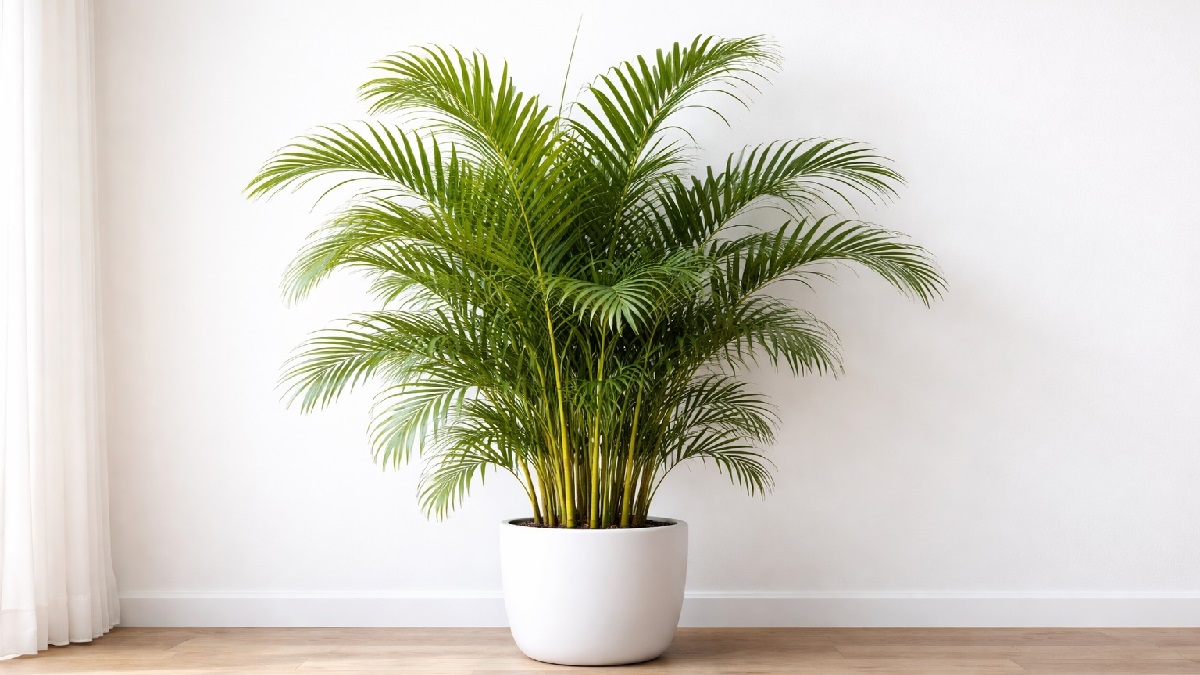
Areca Palm thrives in bright, indirect light and prefers warm, humid conditions similar to its tropical origins. Plant it in well-draining soil and water regularly, keeping the soil slightly moist but never soggy, allowing the top layer to dry between waterings. Maintain temperatures between 18-30°C and provide moderate to high humidity by misting the leaves or using a pebble tray. Feed the plant every 4-6 weeks during the growing season with a balanced fertilizer, reduce feeding in winter, and prune away yellow or damaged fronds to keep the plant healthy and attractive.
Outdoors, areca palms prefer bright, filtered sunlight but can also adapt to full sun, while indoors they perform best in bright light near a south- or west-facing window.
For indoor areca palms grown in pots, select a peat-based potting mix with good drainage, preferably one designed for palms, while outdoor plants thrive in nutrient-rich, slightly acidic soil that drains exceptionally well.
Areca palms like evenly moist soil, so water them when the top layer of soil feels dry, making sure excess water drains away. Water more often during spring and summer and reduce watering in winter, as overwatering can lead to root rot.
Areca palms grow best in warm temperatures between 18-30°C and should be protected from cold drafts or temperatures below 10°C. They prefer moderate to high humidity, and dry air can cause brown leaf tips, so maintaining humidity through misting or placing the plant near a humidifier helps keep it healthy.
Areca palms are heavy feeders and benefit from regular fertilization from spring through early fall. Use a slow-release fertilizer rich in nitrogen and potassium, or a palm-specific fertilizer for outdoor plants, and apply it according to the label directions. Avoid fertilizing during the fall and winter months.
Pruning an areca palm is minimal and mainly done to keep the plant neat and healthy. Remove yellow, brown, or damaged fronds by cutting them close to the base with clean, sharp pruning tools. Avoid cutting green, healthy fronds, as this can weaken the plant. Pruning is best done in spring or early summer, and regular removal of dead leaves helps improve appearance and air circulation.
Areca palms are best propagated by division rather than seeds. The ideal time is during late spring or early summer when the plant is actively growing. To propagate, gently remove the palm from its pot and separate the natural clumps, making sure each division has healthy roots attached. Plant the divisions into individual pots filled with a well-draining potting mix, water lightly, and place them in bright, indirect light. Keep the soil slightly moist and provide warm temperatures and moderate humidity; new growth usually appears within a few weeks.
Growing an areca palm from seed is possible but slow and requires patience. Use fresh seeds, as old seeds have low germination rates. Clean the seeds and soak them in warm water for 24 hours before sowing. Plant them about 1 inch deep in a moist, well-draining potting mix. Keep the soil consistently warm (around 24-30°C), lightly moist, and place the pot in bright, indirect light. Germination can take 1 to 3 months or longer. Once seedlings develop a few leaves, transplant them carefully into individual pots and continue regular areca palm care.
Areca palms prefer to grow slightly root-bound in pots with good drainage, as tighter roots help control their size when grown indoors. Repot about every two years to replace old soil and flush out accumulated fertilizer salts. Reuse the same container if the roots still fit well; if not, step up to a pot just one size larger.
During winter, areca palms should be kept indoors if temperatures drop below 10°C. Place them in bright, indirect light, maintain warmth around 18-24°C, and reduce watering, letting the top inch of soil dry between waterings. Avoid fertilizing until spring, keep humidity moderate, and watch for pests that may appear indoors.
Areca palms rarely bloom indoors, as they need ideal conditions to produce flowers. To encourage blooming, provide bright, indirect sunlight and maintain consistently warm temperatures between 65-75°F (18-24°C). Fertilize regularly from spring to early fall with a balanced, slow-release fertilizer high in nitrogen and potassium, and ensure the soil is well-draining and slightly acidic. Keep humidity levels high and water consistently, avoiding waterlogging. While indoor blooms are uncommon, creating these optimal conditions can sometimes stimulate the plant to produce small, feathery yellow flowers.
Areca palms can face several pests and problems. Common pests include spider mites, mealybugs, scale insects, and aphids, which feed on the leaves and stems, causing yellowing, stunted growth, or sticky residue. Diseases such as leaf spot, root rot, and Fusarium wilt can occur, usually due to overwatering, poor drainage, or low air circulation. Other issues include yellowing leaves from nutrient deficiencies or improper watering, and brown leaf tips caused by low humidity or excess fertilizer. Regular inspection, proper watering, good drainage, adequate humidity, and occasional pruning can help keep the plant healthy and minimize these problems.