Growing and Caring for American Elderberry
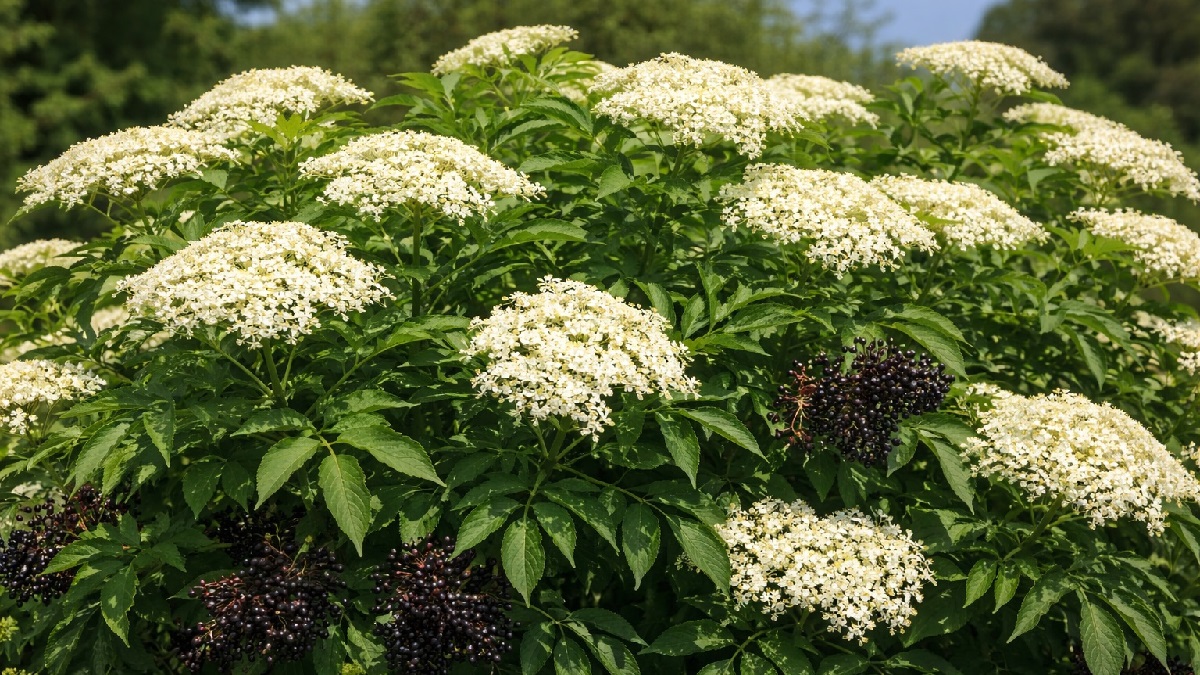
American elderberry is a versatile deciduous shrub known for its bright white flowers and small, dark berries, which are ideal for making jellies and pies. These shrubs attract pollinators and grow best in full sun with moist, well-draining soil. Caution is advised, as all parts of the plant can be toxic to people and pets if not properly prepared.
Related Guides
American Elderberry FAQs
Is American elderberry toxic?
Yes, most parts of the American elderberry plant are toxic if eaten raw, including the leaves, stems, roots, and unripe berries. Fully ripe berries are safe to consume only after proper cooking.
Does American elderberry need full sun?
American elderberry grows best in full sun, which promotes abundant flowering and fruit production. It can tolerate partial shade, but reduced sunlight may lead to fewer blooms and berries.
How often should I water American elderberry?
American elderberry prefers consistently moist soil and is not drought-tolerant. Water deeply once or twice a week, providing about 1-2 inches of water during dry or hot weather.
When should American elderberry be pruned?
Prune American elderberry in late winter or early spring while the plant is dormant. Remove dead or damaged canes and cut back stems older than three years to encourage healthy new growth.
Can American elderberry be grown in containers?
Yes, American elderberry can be grown in large containers with proper drainage. However, it grows best in the ground where roots have ample space. Container-grown plants may require more frequent watering and repotting.
How long does it take for American elderberry to produce fruit?
American elderberry typically begins producing fruit within 2-3 years after planting, especially when grown in full sun with consistent watering and proper pruning.