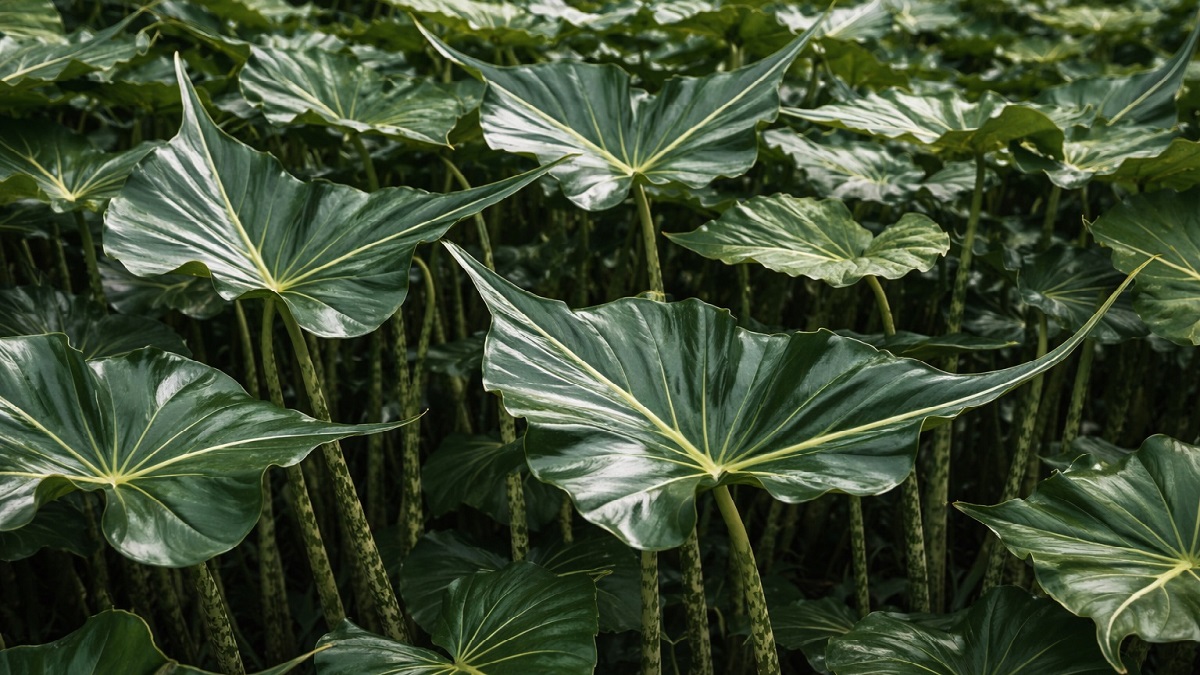
The following are the major care needs for cultivating alocasia stingray: Requires continuous moisture and will not withstand submersion. Use rich, well-drained soil, but keep it wet. Keep the plant in indirect sunlight, since direct sunlight will burn the leaves. Avoid dry indoor circumstances; this plant requires dampness. Feed the alocasia stingray twice a month till dormancy.
An alocasia 'Stingray' prefers bright, indirect light, but it can tolerate some shade as well. Direct sunlight can scorch its leaves, so make sure to avoid placing it in a spot where it receives direct sunlight. If you notice the leaves starting to curl or turn yellow, it might be a sign that the plant is getting too much light. Or, if the leaves are small and pale, it could mean that the plant is not getting enough light.
The alocasia stingray still needs well-draining soil, even if it enjoys dependably damp circumstances. The optimal soil mix is one that retains some moisture while wicking away excess water. Make your own potting mix at home by combining one part perlite, one part potting soil, and one part coco peat for a rich, airy, and well-drained soil.
Your alocasia "Stingray" prefers to be kept damp but not drenched. While underwatering might result in the leaves drying out and wilting, overwatering can cause root rot. Watering your plant thoroughly once a week is advised, however this may vary based on your residence and the time of year. Before you water the soil again, let the top layer dry off. Avoid getting water on the leaves since this might cause fungal illnesses. The plant may be receiving too much or too little water if the leaves begin to turn yellow or brown.
Because they are indigenous to Southeast Asia's tropical regions, these alocasias thrive in warm, humid environments. Generally speaking, normal home temperatures and humidity levels are acceptable. However, if your house is rather dry, you might want to give your plant a humidifier to keep the leaves from becoming dry patches. This tropical houseplant will be content as long as the temperature in your home remains above 59 degrees Fahrenheit. Place this plant in a well-draining area next to a pond or stream for the proper humidity levels if it is to be grown outside in a warm region.
Because it becomes hungry throughout the growing season, the alocasia "Stingray" has to be fertilized on a regular basis. You can apply a slow-release fertilizer every six months or a balanced liquid fertilizer every two weeks. But be careful to follow the directions on the package to avoid overfertilizing your plant, which can cause the roots to "burn" and harm the plant.
Because of the plant's minimal toxicity, pruning Alocasia Stingray mostly entails cutting yellow, dead, or damaged leaves at the base to reroute energy, using clean, sharp tools and gloves, and clipping blossoms if you prefer leaf development over blooming. Additionally, you can divide overgrown rhizomes (bulb-like structures) or clip leggy shoots in the spring or summer for propagation, making sure that each new piece has roots and a growth point.
In the spring or summer, an alocasia "Stingray" can be multiplied via division. The rhizomes, which are the extremities of the plant that resemble bulbs, should be carefully removed from the container and divided into distinct pieces. A minimum of one healthy stem and root system should be present in each part. Place the divisions in a sunny, humid area after repotting them into their individual pots and giving them plenty of water.
Alocasia Stingray is difficult to grow from seed, but it is possible if you set up a mini-terrarium with moist sphagnum moss or seed starting mix, provide warmth (65-85°F), humidity (with a lid), and bright, indirect light. It is usually easier to propagate from its own natural corms (small bulbs) found near its roots when repotting, but seeds can sprout in 1-3 weeks and become seedlings ready for individual pots once their third leaf appears.
Repotting your plant is usually necessary every one to two years, or when it gets root-bound. Because it aligns with the plant's natural growing season, spring is the ideal time to repot. To keep water from building up in the bottom, always use a pot with drainage holes.
Alocasia plants may become dormant in the winter, losing part or all of their leaves. This is perfectly normal. Simply minimize watering at this period and wait for new growth to emerge in the spring.
Bright, indirect light, high humidity (60-80%), steady moisture (not soggy soil), warm temperatures (64-80°F), and balanced fertilizer during the growing season are all necessary for your Alocasia Stingray to bloom. Flowering indicates a very happy, healthy plant in ideal rainforest-like conditions. To start its natural growth cycle for flowers, concentrate on providing exceptional general care.
Common houseplant pests like scale insects, mealybugs, and spider mites might harm your alocasia 'Stingray'. Check your plant frequently for infestation symptoms, and treat them right away with insecticidal soap. Overwatering or placing the plant in a humid environment can also lead to fungal diseases like root rot and leaf spot. Avoid putting water on the leaves, promote adequate ventilation, and apply a fungicide to any indications of fungal disease.