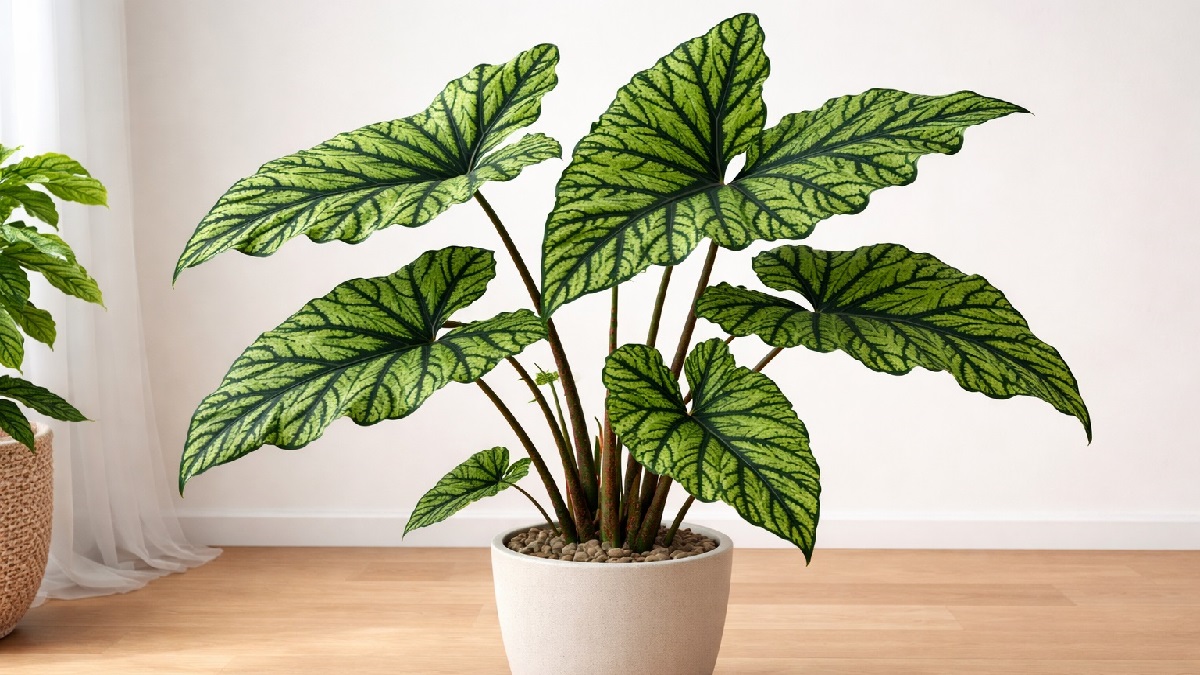
Alocasia Jacklyn, like other alocasia plants, is simple to maintain under the correct circumstances. Provide this houseplant with wet, well-drained soil, indirect light, and a warm, humid atmosphere. Here's how to take care of Alocasia Jacklyn.
Bright, indirect light is ideal for Alocasia Jacklyn. It is best to place it close to a window that lets in filtered sunlight because direct sunlight can scorch its leaves, causing damage and discolouration. Its leaves' development and color are directly impacted by the quality of the light.
Your Alocasia Jacklyn's health can be greatly impacted by the choice of soil mix. Use a potting mix that drains well and has a lot of organic materials. To provide proper drainage and aeration and avoid root rot, a combination of peat, perlite, and pine bark works best.
Alocasia Jacklyn, like many of its relatives, is susceptible to root rot, so be careful not to overwater it. Before you water the potting mix, be sure the top few inches have dried to the touch. If it dries out too much or is overwatered, the leaves may turn yellow and drop early, or they may acquire brown, crispy edges.
Since Alocasia Jacklyn is a tropical plant, warm, humid weather is ideal for its growth. 65 to 85°F (18-29°C) is the optimal range. Lower temperatures than 60°F will harm your plant and limit its growth. Make careful to bring the plant inside when the temperature drops below sixty degrees if you've put it outside for the summer. The plant prefers a humidity level of 60% or higher due to its tropical roots. Greater humidity produces larger, more vibrant leaves.
In the spring and summer, feed your alocasia Jacklyn once a month. Apply a half-strength dilution of a balanced organic fertilizer for houseplants. To prevent scorching sensitive roots, fertilize after watering. When the plant is dormant in the fall and winter, do not fertilize it.
Alocasia Jacklyn does not require frequent trimming, however plants do benefit from cleaning off yellowed or decaying leaves. Cut fading leaves at the base of the petiole. This helps the plant to direct its energy towards healthy development.
It is possible to spread Alocasia Jacklyn by division. The rhizomes, or subterranean stems, should be carefully divided into smaller portions for repotting; each section should have roots and at least one healthy leaf. Fresh soil should be used to plant the divisions in their own pots, and they should be kept in a warm, humid environment until new growth is established. Because Alocasia Jacklyn does not readily root from leaf cuttings, leaf cutting propagation is usually unsuccessful. The most dependable technique for producing new plants is division.
Growing Alocasia Jacklyn from seed is feasible but difficult; it requires patience for germination (weeks) and certain tropical conditions, such as bright, indirect light, high humidity (60%+), warm temperatures (65-85°F), a chunky, well-draining soil mix (like perlite/potting mix) to prevent root rot, careful watering (moist, not soggy), and monthly feeding during growing seasons. Although propagation by offsets or rhizome division from older plants is sometimes quicker and more predictable, starting from seeds produces unique plants.
When your alocasia Jacklyn starts to outgrow its pot or after two or three years, whichever comes first, you'll know it's time to repot. Check for roots emerging from the container's bottom drainage hole. Pour new potting mix into a pot that is one size larger. Make sure the soil level in the new container is the same as it was in the old one before gently tipping the plant out. Water the plant well after repotting.
There are two main ways to overwinter an Alocasia Jacklyn, a tropical plant that is susceptible to cold: either maintain it growing indoors as a houseplant or let it fall dormant by preserving its corms.
An Alocasia Jacklyn needs bright, indirect sunshine, high humidity (60%+), constant temperature (65-80°F), well-draining, airy soil, watering only when the top soil dries, and monthly fertilizer application in the spring and summer to "bloom" (create new leaves and flowers). Maintain humidity to promote lush, robust growth and possible flowering, avoid overwatering to prevent root rot, and concentrate on stable, tropical conditions.
Aphids, mealybugs, and spider mites are just a few of the pests that can harm alocasia plants. If you see any indications of these pests, you must take immediate action. Typical signs include cotton-like clusters (mealybugs), visible microscopic insects or sticky residue on leaves (aphids), and tiny webs on the plant (spider mites). Alocasia plants can quickly sustain serious damage if pests are not managed, therefore treat any infestation right away with insecticidal soap or neem oil. Alocasia plants can also be seriously threatened by fungal diseases, especially in very damp environments. Yellowing leaves, brown patches with a yellow halo, or a white, powdery residue on the plant's surface are indicators of fungal infections. The following actions can help control and avoid fungal infections: Make sure the space where your Alocasia plant is located has adequate ventilation. Fungal growth is inhibited and excessive moisture is reduced with proper air circulation. Fungal infections are frequently caused by overwatering. When the top inch of soil is completely dry to the touch, water your Alocasia. The plant should not be left in wet soil as this might encourage the growth of fungi. Use a fungicide designed especially for indoor plants if you see indications of a fungal infestation. To prevent damaging the plant, carefully follow the application directions. To stop the fungus from spreading, carefully remove and discard any plant parts that are contaminated. To prevent cross-contamination, clean your pruning equipment after every cut. Fungal growth can be aided by high humidity and dim illumination. Make sure your Alocasia gets enough indirect sunlight and think about using a dehumidifier if your interior space is very damp.