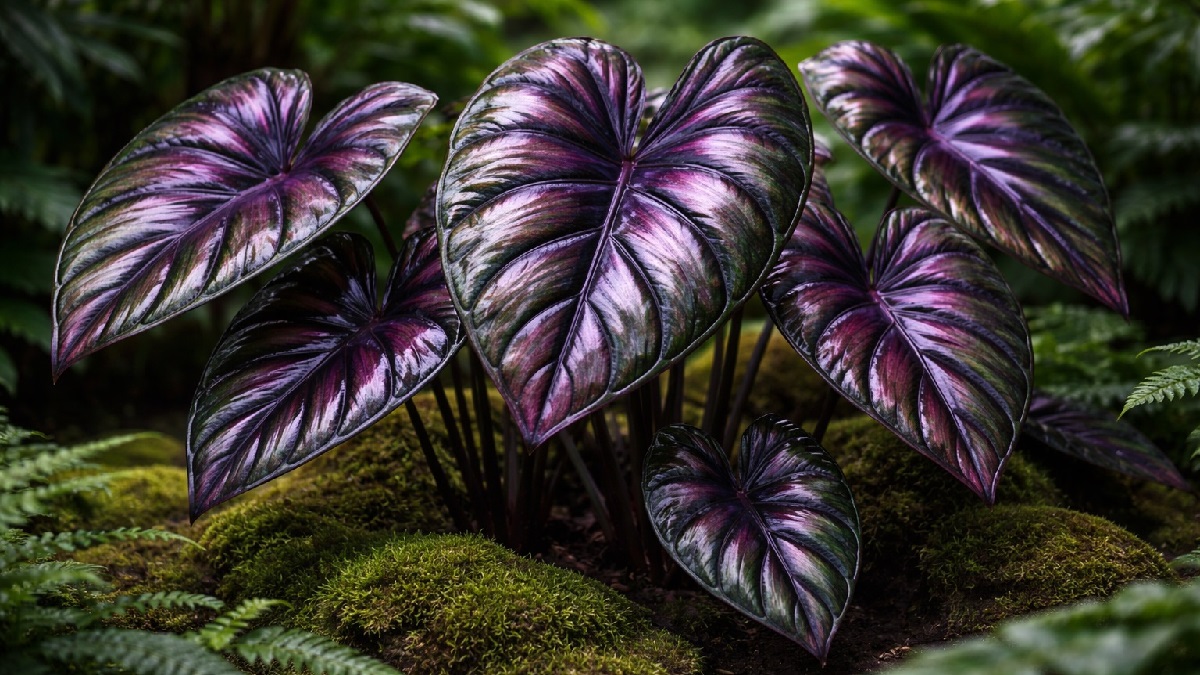
Despite its status as a rare plant, alocasia azlanii is easy to care for and makes a stunning addition to any houseplant collection. Avoid areas that receive direct sunlight and instead provide bright, indirect light. For healthy roots, use a light, well-draining potting media. During the growth season, fertilize once a month and water once a week. To raise the humidity over what is often found in a home, mist the plant or place it on a pebble tray.
Bright yet indirect light is preferred for Alocasia Azlanii. Steer clear of direct sunshine as it might scorch its delicate foliage. The best locations are those that face east or south behind a curtain.
An appropriate potting media is a mixture of one part coconut husk and two parts perlite. Soil that drains properly but retains some moisture is ideal since roots require enough air circulation. Soil with a neutral pH is ideal for plant growth.
This houseplant is susceptible to overwatering, just like a lot of other aroids. Before you water the potting mix, be sure the top few inches have dried to the touch. If it is overwatered or dries out excessively, the leaves may turn yellow and fall off too soon.
The typical home temperature range of 65°F to 75°F is well tolerated by Alocasia azlanii. It performs poorly below 50°F, although it can take a greater range than some others. Aim for high humidity levels of around 60% by adding a small humidifier or pebble tray, misting often, or both. This tropical plant is stressed and stunted by insufficient moisture in the air.
Because this alocasia is a strong feeder, use a balanced houseplant solution diluted to half strength every month throughout the growth season. When the plant becomes dormant in the winter, stop feeding; start again when new growth appears in the spring.
Using a sterile cutting instrument, remove any wasted leaves at the base of the stem. As old leaves die back, do this frequently to promote new growth. Maintaining your plant's appearance is more important than trimming it for size or form.
One method of propagating Alocasia azlanii is to divide the root ball or root stem cuttings in soil or water. Make sure the new plant has enough light and moisture to establish itself.
Although it may be easier to get seeds than nursery-grown plants, it might take up to 90 days for seedlings to emerge. Use these methods to sow in the fall: Pour a potting material that drains properly into a pot. Larger pots can hold many seeds. Lightly cover the seeds with soil mix and plant them 1/4 to 1/2 inch deep. After moistening the soil's surface with distilled water, cover it with a dome or plastic bag. Put the pot on a heating mat in an area with plenty of indirect light. To promote air circulation, keep the soil's surface damp and take out plastic for an hour every few days. When the seeds grow, remove the plastic entirely. Seedlings can be potted up after they reach a height of two inches.
Plastic, fiberglass, or glazed clay are the ideal containers for alocasia azlanii since they hold the moisture these plants need. Every two years, plan to repot into a pot that is two to four inches bigger. Use a quality potting mix that has been enhanced with coconut coir, sand, moss, or perlite.
Alocasia Azlanii can be overwintered like a tropical houseplant by being moved indoors to a bright spot, kept at warm temperatures and high humidity, watering less as growth slows, and stopping fertilizer as it naturally slows or goes dormant in cooler months to avoid cold stress and prepare for spring regrowth.
Light and nutrients are essential for flowering, but keep in mind that blooms are uncommon and your Alocasia Azlanii (Borneo Jewel) is grown primarily for its beautiful foliage. To encourage your Alocasia Azlanii to produce blossoms , concentrate on simulating its tropical home with indirect sunlight, high humidity, constant warmth, well-draining but moisture-holding soil, and regular, balanced feeding.
Mealybugs, spider mites, and scale insects can infect Alocasia azlanii. Pest issues may be avoided by routinely checking the plant and quickly addressing any infestations. A yellowing of the leaves might indicate a shortage or fertilizer burn. Examine the pH of the soil and make any necessary adjustments.