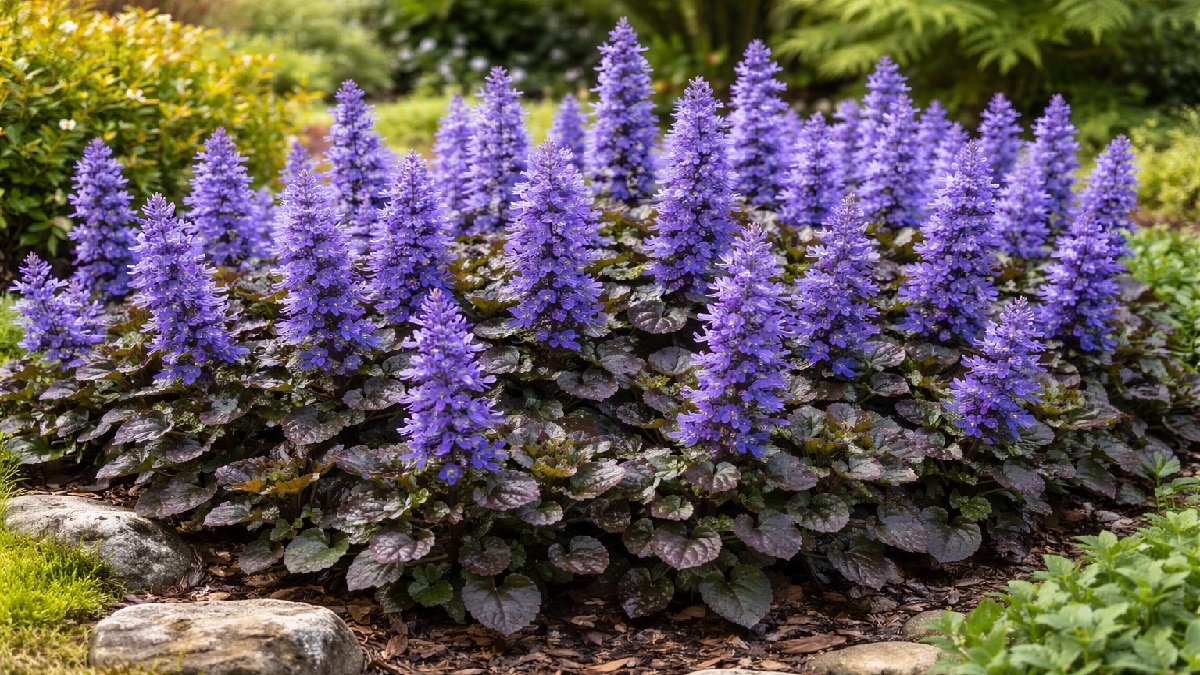
Bugleweed grows best on banks or slopes, or when planted near trees and plants. The following are the primary care needs for cultivating bugleweed: Select a location with full sun to moderate shade. Plant in wet, well-drained soil. Water the soil occasionally to keep it from drying out. Plant bugleweed in a place with adequate air circulation, spaced approximately one foot apart. The optimum time to grow bugleweed is during the spring. Choose an area with partial shade and space plants approximately a foot apart. Dig a hole larger than the root ball, insert the plant in it, fill it with soil, and water it.
Bugleweed thrives in full-sun to partial shade environments. Foliage color is most brilliant when the plant gets at least three to four hours of sunshine every day.
Ajuga tolerates a broad variety of soil conditions, but favors rich, well-drained soils with a slightly acidic pH of 4.5 to 6.5. To avoid root and crown rot, proper drainage is required. In containers, use a high-quality all-purpose potting mix.
Bugleweed needs wet soil, so when young plants are establishing, provide one to two inches of water each week, including rainfall. Once established, plants may take considerable dryness, but one inch of water per week is plenty. Water when the top one to two inches of soil are dry.
Bugleweed tolerates a broad variety of temperatures and is perennial in zones 3 through 10, although it requires sufficient air circulation to avoid crown rot in extremely hot, humid climates.
Feeding is rarely required, unless the plant is developing in poor soil. When needed, use an all-purpose granular fertilizer. Alternatively, apply a water-soluble fertilizer at a rate of one tablespoon per gallon. The ideal time to feed is in the morning, and be sure to rinse any fertilizer granules off the leaves.
Pruning helps keep bugleweed under control. Thoroughly prune runners twice a year. Make sure to eliminate any runners that escape the intended planting area. Cut off the flower spikes in late summer, after the blossoms have faded. To shear back a big area of bugleweed, use a lawnmower with a high blade height. If the planting area becomes too congested, thin out the plants in the fall by digging up the whole cluster and replanting half of the roots. To keep it under control in your garden beds, keep removing it out of places it doesn't belong, or it will take root and become a nuisance.
Bugleweed is one of the easiest plants to grow by division. This is best done in the spring or fall, when there is little risk of frost. Bugleweed spreads by subterranean runners, which create new plants around the parent plant. When the plant colonies grow congested or develop too rapidly, dig up the runners, split them, and transplant them. Here's how: Dig up the mother plant and its surrounding offshoots. Separate the plant clumps into separate plants by hand or with a sterilized, sharp knife. Discard brown or wilted plants. Plant the individual plants in new areas.
Bugleweed plants are simple to cultivate from seed. Plant seeds indoors in the early spring. Here's how. Fill tiny pots with seed beginning mix. Cover the seeds with a thin layer of compost, keeping it wet but not waterlogged. The seeds will germinate within a month. When the seedlings are healthy, transplant them into larger pots. When the seedlings have grown strong enough, put them into the garden.
Bugleweed may be grown in pots and looks lovely when arranged. Make careful to use a pot with drainage. Any sort of pot should work perfectly. Bugleweed may require repotting every few years in its own pot. Choose a pot that is only one or two inches larger in diameter. If bugleweed grows in an arrangement, you can cut it back or eliminate it completely.
Ajuga (Bugleweed) is an excellent overwintering plant because it is a hardy, easy to maintain perennial that forms a dense groundcover, retains its foliage (often evergreen or semi-evergreen) through the winter, prevents weeds, and endures sun or shade, making it an ideal choice for all-year garden interest and ground cover, even in very cold temperatures.
Bugleweed flowers in mid to late April. Bugleweed has glossy, dark green foliage and stunning flower spikes with blue, violet, or purple blooms. It may grow up to ten inches tall, however the flower spikes on certain varieties are shorter. Cut down or mow over bugleweed after it flowers to keep it looking neater.
If you observe your bugleweed's leaves becoming yellow, it might be due to crown rot. Plant in well-draining soil, and don't let the soil become too moist, especially in humid weather. Too little sunshine might cause bugleweed to shed its leaves. Make sure the location of your plant allows it to receive both full sun and moderate shade.