Whiteflies in Garden – Identification, Prevention & Control Guide
What Are Whiteflies?
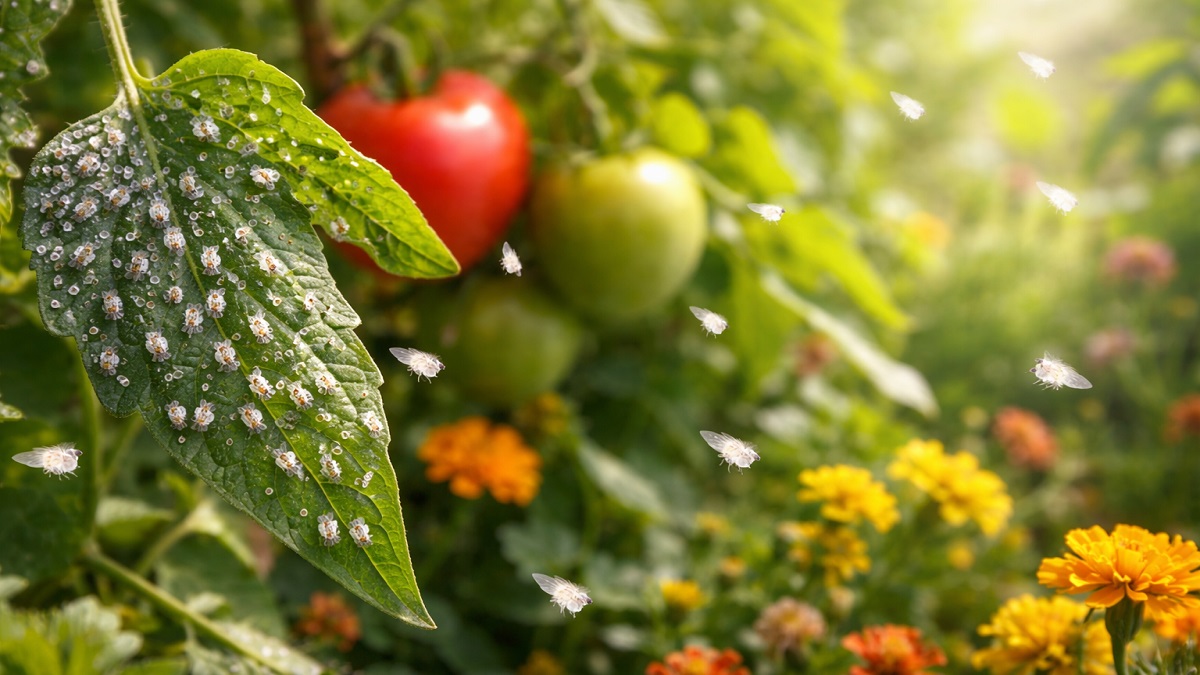
Whiteflies are tiny, winged insects that feed on plant sap. Despite their name, they are not true flies but are closely related to aphids and mealybugs. These pests are commonly found on the undersides of leaves and can quickly multiply in warm conditions.
They weaken plants by sucking nutrients and also produce a sticky substance called honeydew, which attracts ants and promotes fungal growth.
How to Identify Whiteflies
- Small white insects flying when disturbed
- Clusters on the underside of leaves
- Sticky residue (honeydew) on leaves
- Yellowing or curling leaves
- Presence of black sooty mold
If you shake a plant and see tiny white insects flying up like dust, it’s a strong sign of whitefly infestation.
Damage Caused by Whiteflies
- Leaf yellowing and wilting
- Stunted plant growth
- Reduced flowering and fruiting
- Spread of plant viruses
- Sooty mold due to honeydew secretion
Severe infestations can significantly weaken plants and even lead to plant death.
Why Whiteflies Spread Quickly
Whiteflies reproduce rapidly, especially in warm climates and greenhouse conditions. Eggs hatch quickly, and multiple generations can develop in a short time.
They spread through wind, infected plants, and gardening tools, making early control essential.
Plants Commonly Affected
| Plant Type | Examples |
|---|---|
| Vegetables | Tomatoes, cabbage, cucumbers |
| Flowers | Hibiscus, roses, petunias |
| Fruit Plants | Citrus, guava, papaya |
| Indoor Plants | Ficus, poinsettia, peace lily |
Natural Ways to Control Whiteflies
1. Water Spray
Use a strong stream of water to wash whiteflies off plants, especially under leaves.
2. Neem Oil
Neem oil is highly effective in disrupting whitefly life cycles and preventing reproduction.
3. Soap Spray
A mild soap solution helps eliminate whiteflies by breaking down their outer coating.
4. Yellow Sticky Traps
Whiteflies are attracted to yellow color. Sticky traps help capture and monitor populations.
5. Beneficial Insects
- Ladybugs
- Lacewings
- Parasitic wasps
Chemical Control Options
- Insecticidal soaps
- Horticultural oils
- Systemic insecticides (use cautiously)
Always follow safety guidelines and avoid harming beneficial insects.
Preventing Whitefly Infestations
- Inspect plants regularly
- Remove infected leaves early
- Keep garden clean
- Avoid overcrowding plants
- Encourage natural predators
Healthy plants are less vulnerable to pest attacks and recover faster.
Conclusion
Whiteflies are a common but manageable garden pest. Early detection and consistent treatment can prevent serious damage.
Using natural remedies and maintaining a healthy garden ecosystem are the best ways to control whiteflies effectively.
For similar pests, check our aphids control guide.
Frequently Asked Questions About Whiteflies
What causes whiteflies in plants?
Whiteflies are attracted to warm environments and weak plants. Overcrowding and poor airflow increase infestations.
How do I get rid of whiteflies fast?
Use water spray followed by neem oil or soap spray for quick and effective control.
Do whiteflies kill plants?
Yes, severe infestations can weaken plants and may eventually kill them.
Are whiteflies harmful to humans?
No, whiteflies are not harmful to humans but can damage plants significantly.