Peat-Based Compost: Uses, Benefits, and Environmental Impact
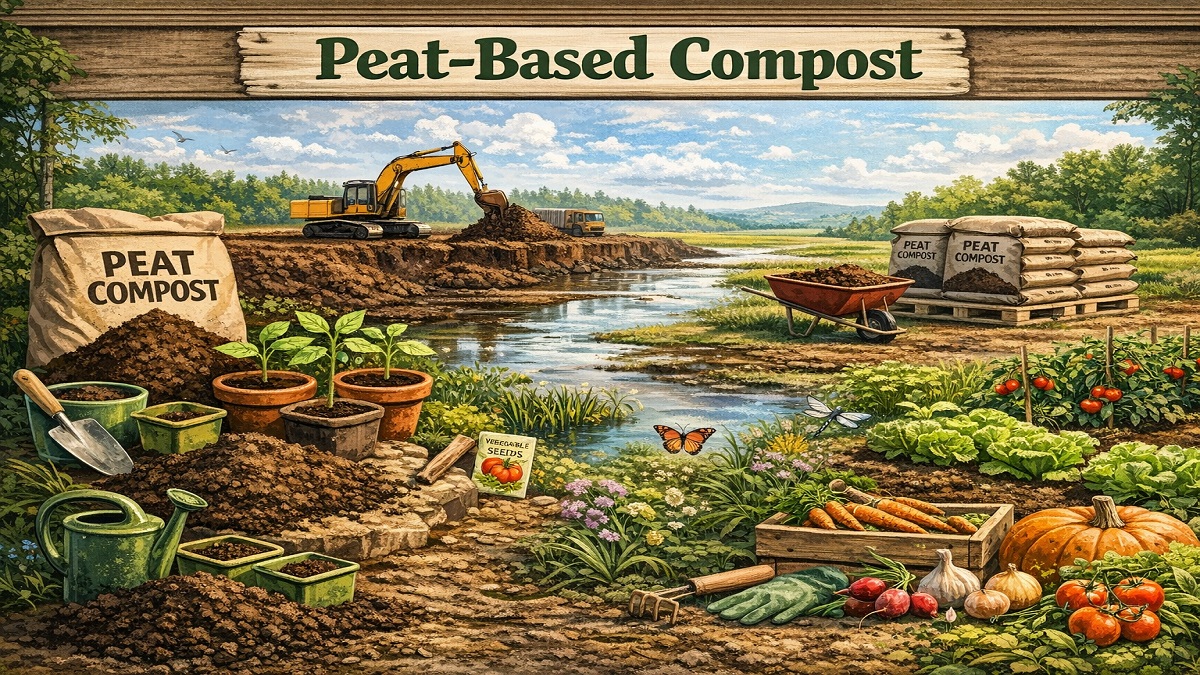
Peat-based compost is one of the most commonly used growing media in gardening and horticulture. It has been popular for decades because of its excellent water-holding capacity, light texture, and ability to support healthy plant growth. Gardeners often use peat-based compost for seed starting, potting plants, and improving soil structure. However, in recent years, peat-based compost has become a topic of debate due to its environmental impact and sustainability concerns.
Understanding what peat-based compost is, how it works, its advantages, and its drawbacks is important for gardeners who want to make informed and eco-friendly choices.
What Is Peat-Based Compost?
Peat-based compost is a type of compost made primarily from peat, which is partially decomposed organic matter formed in waterlogged conditions over thousands of years. Peat is mainly found in peatlands, bogs, and wetlands, where dead plant material accumulates and decomposes very slowly due to lack of oxygen.
This slow decomposition process creates a soft, spongy material that is rich in carbon and organic matter. When harvested and processed, peat is mixed with other ingredients such as sand, perlite, vermiculite, or fertilizers to create peat-based compost suitable for gardening.
Peat-based compost is widely used because it provides a stable, lightweight, and consistent growing medium for many types of plants.
How Peat Is Formed
Peat forms naturally in wetland ecosystems called peat bogs. These environments are constantly waterlogged, acidic, and low in oxygen. Under such conditions, plant material such as moss, grasses, and shrubs does not fully decompose. Instead, it slowly builds up in layers over thousands of years.
It is estimated that peat accumulates at a rate of about 1 millimeter per year, which means that a one-meter layer of peat can take around 1,000 years to form. This extremely slow formation rate makes peat a non-renewable resource on a human timescale.
Characteristics of Peat-Based Compost
1. High Water Retention
Peat can hold up to 20 times its weight in water, helping maintain consistent moisture levels for plant roots.
2. Lightweight Structure
Peat is light and airy, making it easy to handle while improving soil aeration.
3. Good Drainage
Although peat holds water well, it also drains excess water efficiently, preventing waterlogging.
4. Low Nutrient Content
Peat itself contains very few nutrients, allowing gardeners to control plant nutrition precisely through fertilizers.
5. Slightly Acidic pH
Peat has a naturally acidic pH, usually between 3.5 and 4.5, making it suitable for acid-loving plants such as blueberries, azaleas, and rhododendrons.
Uses of Peat-Based Compost
1. Seed Starting
Ideal for germinating seeds because it is sterile, light, and moisture-retentive.
2. Potting Mixes
Most commercial potting soils contain peat due to its excellent aeration and water retention.
3. Soil Conditioning
Improves soil structure, especially in sandy or clay soils.
4. Growing Acid-Loving Plants
Plants that prefer acidic soil thrive in peat-based compost.
5. Professional Horticulture
Greenhouses, nurseries, and commercial growers rely heavily on peat-based compost for consistent plant production.
Benefits of Peat-Based Compost
1. Excellent Growing Medium
Creates ideal conditions for root development with a balanced air-to-water ratio.
2. Consistency and Reliability
Uniform in texture and quality, making it reliable for commercial use.
3. Sterile and Clean
Naturally low in pathogens, weeds, and pests.
4. Easy to Handle
Lightweight and easy to transport, store, and use.
5. Long Shelf Life
Does not break down quickly and remains effective for long periods.
Environmental Concerns of Peat-Based Compost
1. Destruction of Peatlands
Harvesting peat destroys peat bog ecosystems that support unique plant and animal species.
2. Carbon Emissions
When peat is removed and exposed to air, stored carbon is released as carbon dioxide, contributing to climate change.
3. Slow Regeneration
Peat takes thousands of years to form, making it effectively non-renewable.
4. Loss of Biodiversity
Peat extraction threatens rare plants, birds, insects, and microorganisms.
5. Water Regulation Issues
Peatlands help regulate water flow and prevent floods; their destruction increases environmental risks.
Peat-Based Compost and Climate Change
Peatlands are one of the largest natural carbon sinks on Earth. When peat is harvested, stored carbon is released into the atmosphere, accelerating global warming. Drained peatlands contribute significantly to global human-made carbon emissions despite covering only a small land area.
Alternatives to Peat-Based Compost
- Coco Coir: Renewable material made from coconut husks.
- Compost: Homemade compost from kitchen and garden waste.
- Leaf Mold: Decomposed leaves that retain moisture well.
- Bark Compost: Improves soil structure and drainage.
- Wood Fiber: Provides aeration and water retention.
Peat-Based Compost vs Peat-Free Compost
| Feature | Peat-Based Compost | Peat-Free Compost |
|---|---|---|
| Sustainability | Low | High |
| Water Retention | Excellent | Good |
| Nutrient Content | Low | Medium to High |
| Environmental Impact | High | Low |
| Carbon Footprint | High | Low |
Conclusion
Peat-based compost has played a major role in modern gardening due to its excellent structure and water retention. However, because peat is non-renewable and its extraction causes environmental damage, many gardeners are shifting to peat-free alternatives.
Sustainable gardening is not just about growing healthy plants - it is about protecting ecosystems and combating climate change for future generations. 🌍🌱
Frequently Asked Questions
Is peat-based compost environmentally friendly?
No. Peat extraction damages peatlands, releases stored carbon, and contributes to climate change. Peat-free alternatives are more sustainable and eco-friendly.
Why is peat-based compost good for plants?
It provides excellent water retention, aeration, and a stable growing medium that supports strong root development and healthy plant growth.
What are the best alternatives to peat-based compost?
Coco coir, homemade compost, leaf mold, bark compost, and wood fiber are sustainable peat-free alternatives that offer good moisture retention and soil structure.
Is peat a renewable resource?
No. Peat forms extremely slowly - about 1 millimeter per year - making it non-renewable on a human timescale.
Can I mix peat-based compost with regular soil?
Yes. Mixing peat-based compost with garden soil improves soil structure, aeration, and moisture retention.