Organic Gardening Tips – Grow Naturally and Sustainably
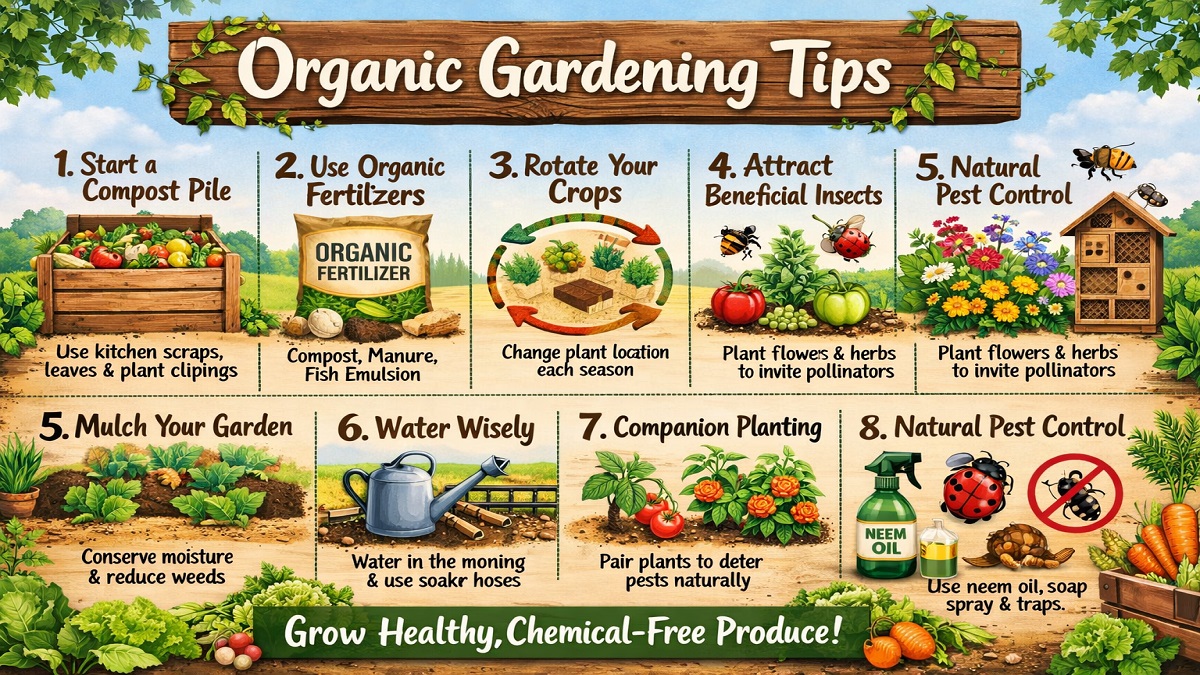
Introduction to Organic Gardening
Organic gardening is a sustainable way of growing plants without the use of synthetic fertilizers, pesticides, or genetically modified organisms. It focuses on improving soil health, conserving water, and maintaining ecological balance. Whether you are growing vegetables, herbs, or flowers, organic gardening ensures that your plants are healthier and your produce is free from harmful chemicals.
With increasing awareness about environmental protection and healthy living, organic gardening has become a popular choice among home gardeners. By following simple natural practices, you can create a thriving garden that benefits both you and the planet.
1. Start with Healthy Soil
Soil is the foundation of organic gardening. Rich, fertile soil provides essential nutrients that plants need to grow strong and healthy. Begin by testing your soil and improving its quality using natural methods.
Improve Soil Naturally
- Add compost to increase nutrients
- Use organic manure like cow dung or vermicompost
- Include leaf mold and kitchen waste
Healthy soil also supports beneficial microorganisms, which play a key role in breaking down organic matter and making nutrients available to plants.
2. Composting – Nature’s Fertilizer
Composting is one of the most effective organic gardening techniques. It involves recycling kitchen scraps and garden waste into nutrient-rich compost.
What You Can Compost
- Vegetable peels
- Fruit scraps
- Dry leaves
- Grass clippings
Avoid composting meat, dairy products, and oily foods, as they may attract pests. Regular turning of compost helps speed up decomposition and ensures proper aeration.
3. Choose the Right Plants
Selecting plants suitable for your climate and soil conditions is essential for successful organic gardening. Native plants usually perform better because they are adapted to local conditions.
Seasonal planting is also important. For example, leafy greens grow best in cooler months, while tomatoes and peppers thrive in warm weather.
4. Natural Pest Control Methods
Instead of chemical pesticides, organic gardening uses natural methods to control pests.
Effective Techniques
- Use neem oil spray
- Introduce beneficial insects like ladybugs
- Plant companion plants such as marigolds
Regular inspection of plants helps detect pests early and prevents major infestations.
5. Watering Techniques
Proper watering is crucial for plant health. Overwatering can cause root rot, while underwatering can stress plants.
- Water early in the morning
- Use drip irrigation for efficiency
- Mulch soil to retain moisture
Mulching also helps control weeds and maintain soil temperature.
6. Crop Rotation and Companion Planting
Crop rotation prevents soil depletion and reduces pest problems. Avoid planting the same crop in the same location every season.
Companion planting involves growing compatible plants together. For example, basil improves tomato growth and flavor.
7. Benefits of Organic Gardening
| Benefit | Description |
|---|---|
| Healthier Food | No harmful chemicals or pesticides |
| Eco-Friendly | Protects soil, water, and wildlife |
| Cost Effective | Uses natural and recycled materials |
| Better Taste | Fresh and flavorful produce |
8. Common Mistakes to Avoid
- Overusing organic fertilizers
- Ignoring soil quality
- Planting in unsuitable seasons
- Overwatering plants
Frequently Asked Questions
What is organic gardening?
Organic gardening is a method of growing plants using natural inputs and avoiding synthetic chemicals.
Is organic gardening suitable for beginners?
Yes, it is beginner-friendly and focuses on simple, natural techniques.
How can I control pests naturally?
You can use neem oil, companion planting, and beneficial insects to manage pests.