Money-Saving Tips For Undercover Growing
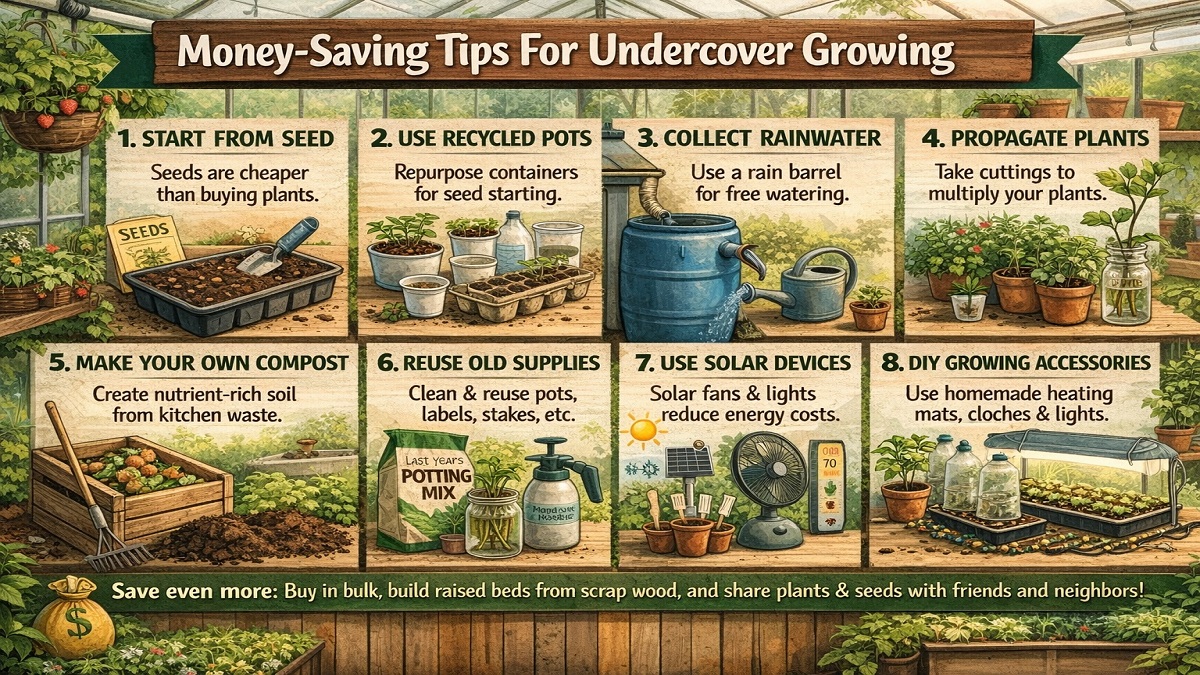
"Undercover growing" refers to cultivating plants in a protected environment rather than directly outdoors. This can include using greenhouses, hoop houses, tunnels, cloches, or even simple row covers to shield plants from harsh weather, pests, or temperature fluctuations. By controlling light, temperature, and humidity, undercover growing allows for extended growing seasons, faster plant growth, and improved crop yields, especially during colder months or in regions with unpredictable climates. Here’s a set of money-saving tips for undercover (indoor, greenhouse, or polytunnel) growing:
1. Choose Cost-Effective Structures
Use DIY or repurposed materials for greenhouses or tunnels, like PVC frames, old windows, or plastic sheeting.
Start with smaller setups and expand gradually to reduce upfront costs.
2. Use Energy-Efficient Lighting
Opt for LED grow lights over traditional incandescent or fluorescent bulbs—they use less electricity and last longer.
Combine natural sunlight wherever possible to minimize artificial light needs.
3. Recycle and Reuse Containers
Use old pots, trays, buckets, or cartons for seedlings and small plants.
Repurpose materials like plastic bottles or jars for cloches or mini-greenhouses.
4. DIY Heating and Insulation
Use thermal mass (like water barrels or stones) in greenhouses to store heat.
Insulate walls with bubble wrap or recycled materials to reduce heating costs.
5. Water Efficiently
Collect rainwater or reuse kitchen water (like from rinsed vegetables) for irrigation.
Use drip irrigation or self-watering containers to reduce water waste.
6. Start from Seeds
Growing from seeds is far cheaper than buying mature plants or seedlings.
Save seeds from your harvest to reuse in future seasons.
7. Succession Planting
Plan multiple crops in the same space throughout the season to maximize yield per square foot.
8. DIY Fertilizers and Soil
Make compost from kitchen scraps and garden waste to reduce the need for commercial fertilizers.
Use homemade organic solutions like diluted seaweed, compost tea, or coffee grounds.
9. Pest Management on a Budget
Use physical barriers, companion planting, and homemade sprays instead of expensive chemical pesticides.
Conclusion
By combining these strategies, you can cut costs significantly while maintaining healthy growth and high yields in undercover setups.
Frequently Asked Questions About Undercover Growing
What is undercover growing?
Undercover growing means cultivating plants in protected structures like greenhouses, polytunnels, cloches, or row covers to control temperature and growing conditions.
Is undercover growing expensive?
No. With recycled materials, DIY structures, and energy-efficient lighting, undercover growing can be very affordable.
How can I reduce heating costs?
Insulating structures, using thermal mass such as water barrels, and maximizing natural sunlight can significantly reduce heating expenses.
Is it cheaper to grow from seed?
Yes, growing plants from seed is much cheaper than buying seedlings and allows you to save seeds for future seasons.