How To Remedy Plot Waterlogging
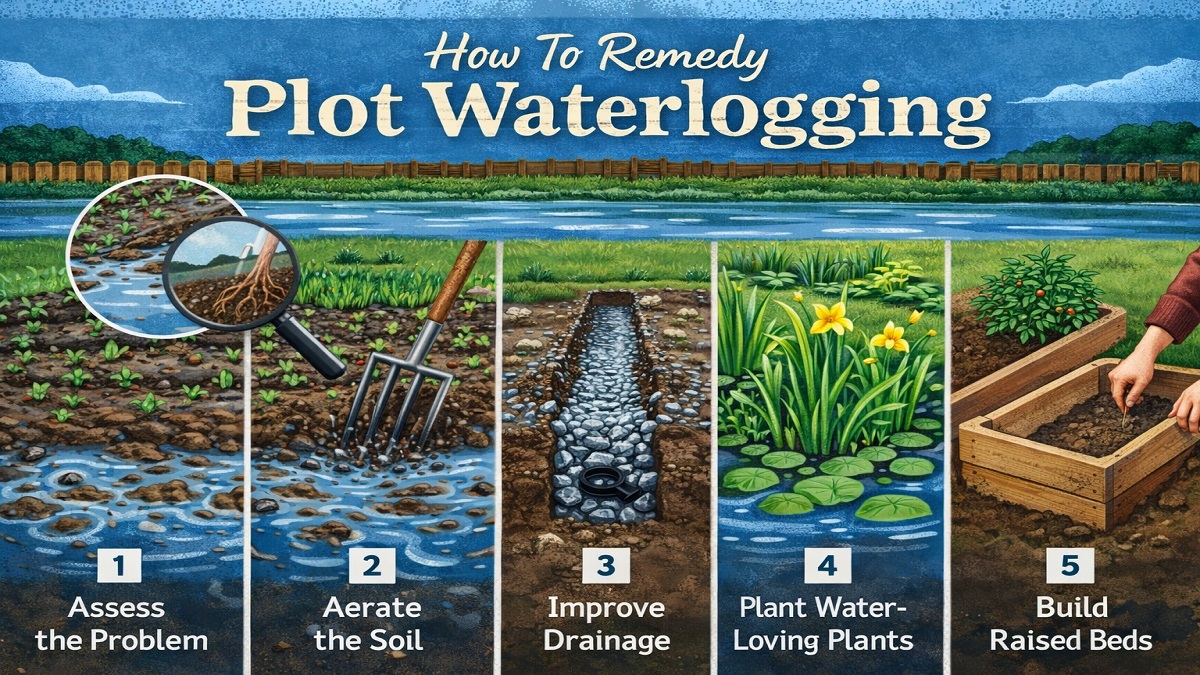
Fixing waterlogging in a garden plot involves both short-term solutions and long-term strategies, tailored to the severity of the problem and the soil type. Immediate measures might include improving drainage or removing standing water, while long-term solutions could involve installing proper drainage systems, raising beds, or amending the soil to enhance water absorption. Here’s a clear guide on remedying waterlogged garden plots:
1. Improve Drainage
Raised beds: Elevate the soil level to allow water to drain away from plant roots.
Soil amendment: Mix in organic matter like compost, well-rotted manure, or coarse sand to improve soil structure and permeability.
Drainage channels or trenches: Dig small channels to redirect excess water away from the plot.
2. Aerate the Soil
Use a garden fork or aerator to loosen compacted soil, allowing water to penetrate deeper and reducing surface pooling.
3. Choose Water-Tolerant Plants
In persistently damp areas, grow plants that tolerate wet conditions (e.g., certain reeds, watercress, or marsh marigold) until drainage is improved.
4. Control Water Sources
Redirect gutters, downspouts, or irrigation so water doesn’t accumulate in low spots.
Avoid overwatering, especially during rainy periods.
5. Mulch Wisely
Use coarse mulch like bark or straw to reduce surface crusting and slow down waterlogging, but avoid dense mats that trap water.
6. Long-Term Solutions
Install subsurface drainage pipes in areas with chronic waterlogging.
Regrade the plot to create a gentle slope that encourages water to flow away.
Proper drainage not only prevents waterlogging but also protects plant roots from rot, fungal diseases, and stunted growth.
Frequently Asked Questions About Plot Waterlogging
What causes waterlogging in garden plots?
Waterlogging is usually caused by poor soil drainage, compacted soil, heavy clay content, or excess rainfall combined with improper garden grading.
Can plants recover from waterlogged soil?
Some plants can recover if drainage is improved quickly, but prolonged waterlogging can cause root rot and permanent damage.
Are raised beds effective for waterlogged gardens?
Yes, raised beds are one of the most effective solutions because they lift plant roots above saturated soil and improve drainage.
How long does it take to fix a waterlogged plot?
Short-term fixes may help immediately, but permanent drainage improvements can take weeks or months depending on soil type and weather.