How to Make a Plant Bloom: 13 Expert Tips for Healthy & Beautiful Flowers
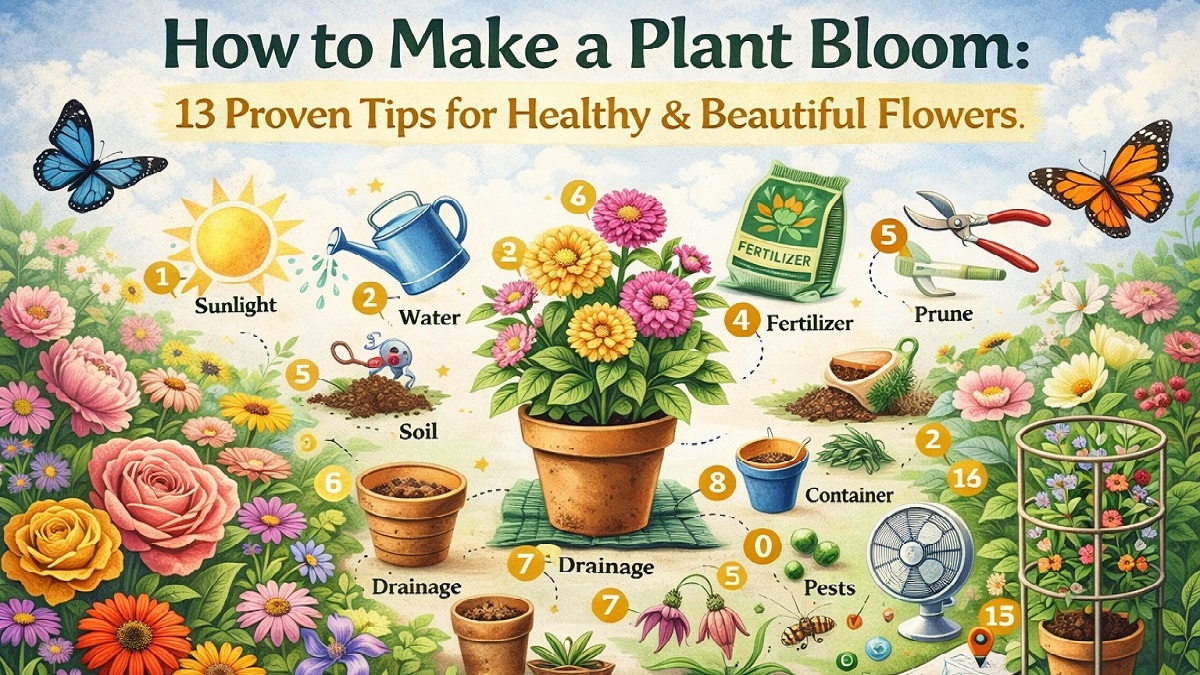
Blooming is one of the most rewarding stages in a plant’s life cycle. Flowers are not only visually appealing but also play a vital role in plant reproduction by attracting pollinators and producing seeds. However, many gardeners struggle with plants that grow well but refuse to bloom. This usually happens because the plant’s basic needs are not being met in the right balance.
Making a plant bloom requires understanding how plants grow, what triggers flowering, and how environmental and nutritional factors affect the process. With proper care, almost any flowering plant can be encouraged to bloom beautifully.
Understanding the Flowering Process
Before learning how to make a plant bloom, it is important to understand why plants flower in the first place. Flowering is a reproductive response. When a plant reaches maturity and environmental conditions are favorable, it produces flowers so it can reproduce.
The flowering process is controlled by:
- Plant age and maturity
- Light exposure (photoperiod)
- Temperature
- Nutrient availability
- Water supply
- Plant hormones
If even one of these factors is out of balance, the plant may focus only on growing leaves and stems instead of flowers.
1. Provide the Right Amount of Light
Light is the most important factor for blooming. Most flowering plants need sufficient sunlight to produce energy for flower formation.
Types of Light Needs
- Full sun plants: Need 6–8 hours of direct sunlight (e.g., roses, hibiscus, sunflowers).
- Partial sun plants: Need 3–5 hours of sunlight (e.g., begonias, impatiens).
- Shade plants: Need indirect light (e.g., peace lily, anthurium).
If a plant does not get enough light, it will produce leaves but not flowers.
Tips
- Place outdoor plants in sunny locations according to their needs.
- For indoor plants, place them near bright windows.
- Rotate pots so all sides get equal light.
- Use grow lights if natural light is insufficient.
2. Use the Right Fertilizer
Nutrients play a major role in flowering. Plants need three main nutrients:
- Nitrogen (N): For leaf growth
- Phosphorus (P): For root and flower development
- Potassium (K): For overall plant health and bloom quality
If a plant receives too much nitrogen, it will grow lots of green leaves but very few flowers.
Best Fertilizer for Blooming
Use fertilizers with lower nitrogen and higher phosphorus and potassium, such as 5-10-10 or 10-20-20.
Tips
- Fertilize every 2–3 weeks during the growing season.
- Do not over-fertilize.
- Use organic options like bone meal, compost, and vermicompost.
3. Proper Watering
Both overwatering and underwatering can prevent blooming.
Overwatering Problems
- Root rot
- Lack of oxygen
- Weak roots
- No flowers
Underwatering Problems
- Stress
- Dropping buds
- Poor flower formation
Tips
- Water when the top soil feels dry.
- Ensure good drainage.
- Water deeply but less frequently.
4. Maintain the Right Temperature
Most plants bloom between 18°C to 30°C. Extreme heat or cold can delay flowering.
- Protect plants from frost.
- Provide shade during intense heat.
- Move indoor plants away from heaters and AC vents.
5. Pruning and Deadheading
Pruning redirects energy toward flower production.
- Remove weak or diseased branches.
- Deadhead spent flowers regularly.
- Use clean, sharp tools.
6. Correct Pot Size and Root Space
Repot plants every 1–2 years and avoid extremely large pots.
7. Soil Quality Matters
Use well-drained soil rich in organic matter. Mix compost, cocopeat, and sand for better aeration.
8. Understand Photoperiod (Day Length)
- Short-day plants: Bloom when nights are longer.
- Long-day plants: Bloom when days are longer.
- Day-neutral plants: Bloom regardless of day length.
9. Moderate Stress Can Trigger Flowering
Slight water reduction or cooler temperatures can sometimes stimulate blooming, but excessive stress can harm the plant.
10. Pest and Disease Control
Keep plants healthy using neem oil sprays, soap water, and proper hygiene.
11. Plant Maturity
Some plants need time before they bloom. Patience and consistent care are essential.
12. Natural Bloom Boosters
- Banana peel compost
- Epsom salt
- Bone meal
- Onion peel water
13. Indoor Plant Blooming Tips
- Place near south or east-facing windows.
- Use LED grow lights.
- Maintain humidity.
Common Mistakes That Prevent Blooming
- Too much nitrogen
- Poor lighting
- Overwatering
- No pruning
- Wrong pot size
- Extreme temperatures
- Ignoring pests
Conclusion
Making a plant bloom is about creating the right balance of light, nutrients, water, temperature, and care. A healthy plant is far more likely to flower than a stressed one. Provide consistent care, understand your plant’s needs, and blooming will naturally follow.
Once you master these principles, flowers become a predictable and beautiful reward for your patience and attention.
Frequently Asked Questions
Why is my plant not blooming?
Plants may fail to bloom due to insufficient sunlight, too much nitrogen fertilizer, overwatering, temperature stress, or because they have not reached maturity.
What fertilizer is best for flowering plants?
Fertilizers high in phosphorus and potassium such as 5-10-10 or 10-20-20 are ideal for promoting flower development.
How do I encourage indoor plants to bloom?
Place indoor plants near bright windows, use grow lights if needed, maintain humidity, prune regularly, and use bloom-specific fertilizers.
Does pruning increase flowering?
Yes. Pruning and removing spent flowers (deadheading) helps redirect energy into producing new blooms.