How to Grow Fruit and Nuts to Suit Your Plot
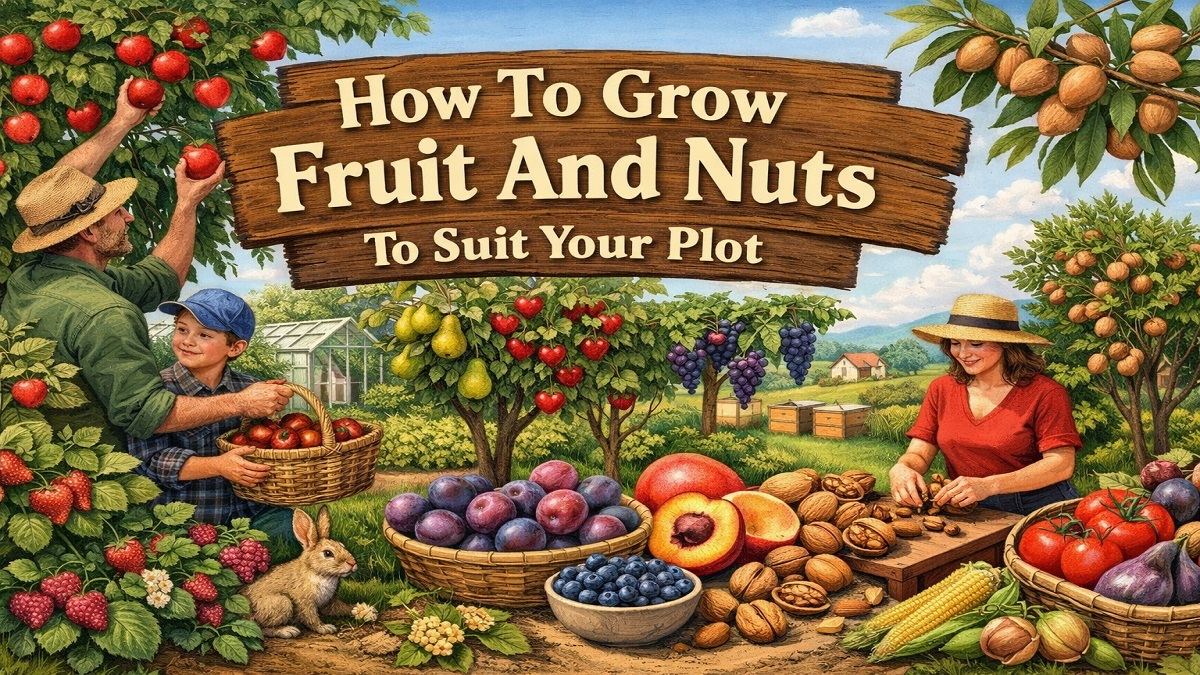
Every year, many gardeners plant fruit and nut trees hoping for a plentiful harvest. These trees need additional care to stay productive and to manage pests and diseases. For dedicated gardeners, the effort pays off with rewarding results. Here’s a guide to growing fruit and nut trees tailored to your specific plot.
Evaluate Your Plot
Space: Consider how much room is available—some trees require wide spacing, while dwarf or columnar types are ideal for smaller gardens.
Soil: Check soil type, pH, and drainage. Most fruit trees prefer fertile, well-drained soil, while nut trees often do best in slightly acidic to neutral conditions.
Light: Ensure the site gets full sun (6-8 hours daily). Avoid planting sun-loving trees in shaded areas.
Climate: Select species suited to your hardiness zone, local temperatures, and rainfall patterns.
Choose Suitable Varieties
Opt for dwarf, semi-dwarf, or espaliered forms to fit limited spaces.
Pick varieties that thrive in your soil and climate and show resistance to local pests and diseases.
For nut trees, select cultivars compatible with your growing season and chill-hour requirements.
Plan Pollination
Some fruit trees, such as apples, pears, and certain plums, require cross-pollination. Plant compatible varieties nearby.
Nut trees often depend on wind or insect pollination; multiple trees may be necessary for good yields.
Prepare the Planting Site
Dig wide, well-drained holes and enrich the soil with compost or organic matter.
Allow enough space for canopy development and adequate airflow.
Plant and Maintain
Plant during dormancy (late winter or early spring) to give roots time to establish.
Water consistently, mulch to conserve moisture, and stake young trees if needed.
Prune to maintain shape, remove dead branches, and promote good air circulation.
Ongoing Care
Apply fertilizer based on the unique requirements of each plant species.
Monitor for pests and diseases and take preventive action.
Harvest fruit and nuts at the proper time for optimal flavor and yield.
Conclusion
By aligning tree type, size, and variety with your plot’s space, sunlight, soil, and climate, you can establish a productive, manageable, and healthy fruit and nut garden.
Frequently Asked Questions About Growing Fruit and Nuts
How do I choose fruit trees for a small garden?
Dwarf, semi-dwarf, columnar, and espalier fruit trees are ideal for smaller plots and containers.
Do fruit and nut trees need full sun?
Yes, most fruit and nut trees require at least 6-8 hours of direct sunlight each day for healthy growth and good yields.
Do I need more than one tree for pollination?
Many fruit trees need a compatible pollination partner nearby, while nut trees often require multiple plants for reliable harvests.
When is the best time to plant fruit and nut trees?
The best time to plant is during dormancy, usually in late winter or early spring, so roots can establish before active growth begins.