How To Carry On Growing Food Over Winter
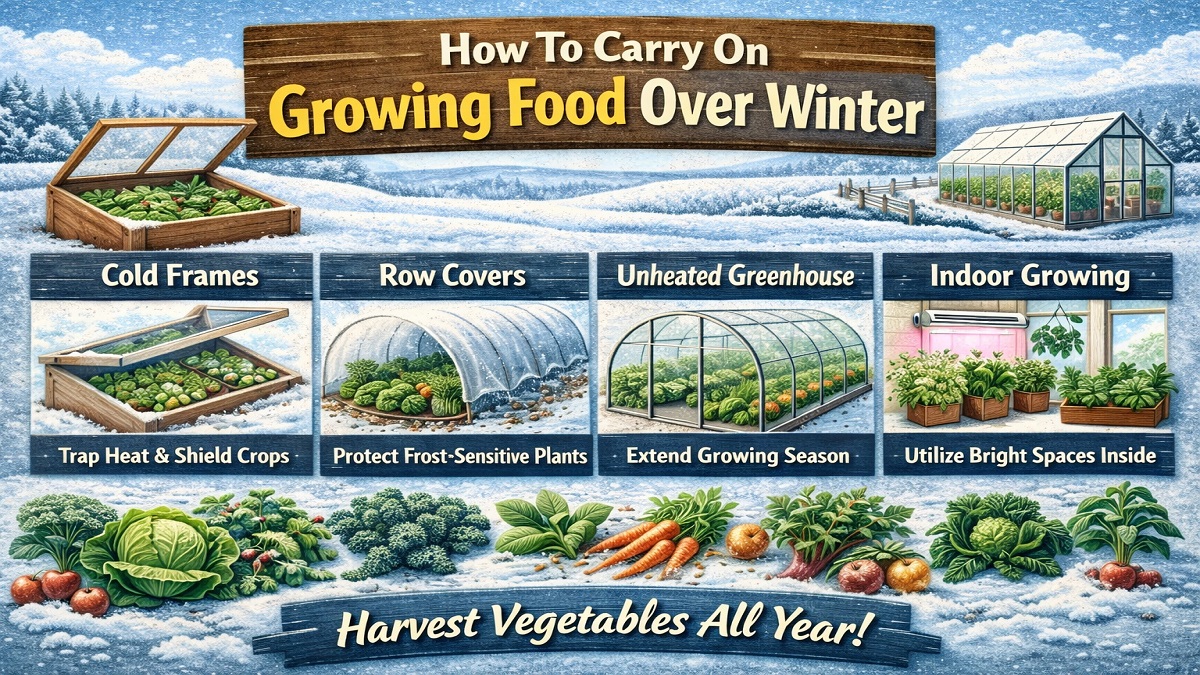
Growing food in winter can feel both challenging and rewarding. The cold months bring risks like frost and slower plant growth, making gardening more difficult in some ways. Yet, winter also offers unique opportunities to harvest fresh, seasonal produce and continue enjoying your gardening hobby year-round. With the right planning and care, winter gardening can be surprisingly fun and satisfying, allowing you to keep producing food even when the temperatures drop. Growing food over winter requires a mix of planning, protection, and choosing the right crops. Here’s a comprehensive approach:
1. Choose Cold-Hardy Crops
Some vegetables and herbs can tolerate frost and low temperatures:
Leafy greens: Spinach, kale, Swiss chard, mustard greens, arugula
Root vegetables: Carrots, beets, radishes, turnips
Alliums: Garlic, onions, leeks
Herbs: Parsley, thyme, rosemary, chives
2. Use Season Extension Techniques
Cold frames: Simple structures with transparent covers that trap heat and protect plants from frost.
Row covers or cloches: Lightweight fabrics or mini-greenhouses to insulate crops.
Greenhouses or polytunnels: Provide more stable temperatures for longer harvests.
Mulching: Apply straw, leaves, or compost around plants to protect roots and retain warmth.
3. Choose the Right Location
South-facing beds or containers receive maximum sunlight in winter.
Sheltered spots reduce wind chill and frost damage.
4. Adjust Watering
Plants need less water in winter, but soil should not completely dry out. Water during warmer parts of the day to prevent freezing.
5. Harvest Regularly
Remove mature leaves and roots to encourage continuous growth.
For hardy crops like kale or spinach, cut-and-come-again harvesting works well.
6. Consider Indoor Growing
Herbs and salad greens can be grown on sunny windowsills or under LED grow lights.
Containers indoors protect plants from frost and extend growing possibilities.
Conclusion
With these strategies, you can enjoy fresh, home-grown vegetables and herbs even in the coldest months, keeping your winter meals vibrant and healthy.
Frequently Asked Questions About Growing Food Over Winter
Can you really grow food over winter?
Yes, many cold-hardy vegetables and herbs can grow or survive winter when protected from frost and extreme cold.
What vegetables grow best in winter?
Leafy greens, root vegetables, and alliums such as spinach, kale, carrots, garlic, and leeks grow well in winter.
Do I need a greenhouse to grow food in winter?
No, cold frames, row covers, mulching, and indoor growing can all support winter food production.
How often should winter crops be watered?
Water sparingly during winter, ensuring soil stays lightly moist and watering during warmer daytime hours.