How To Boost Results With Bare-Root Fruit Trees
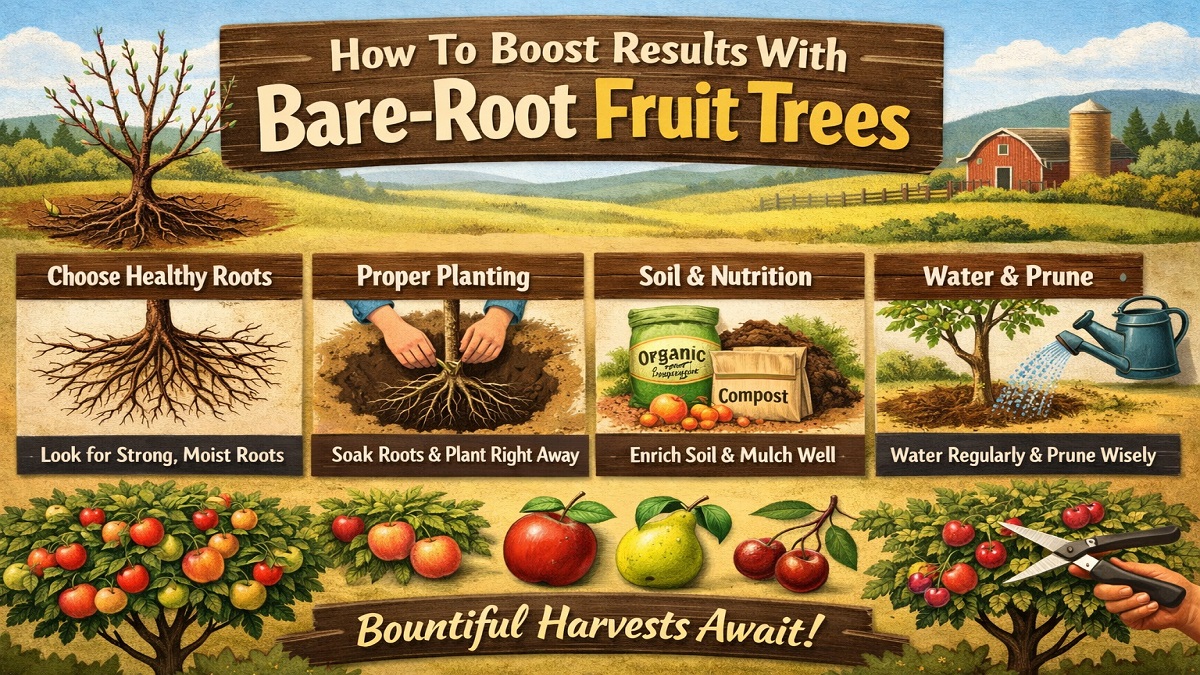
Bare-root trees tend to be healthier, establish faster, and adjust more easily to their new surroundings. Here are some tips for successfully growing bare-root fruit trees:
Choose Healthy Trees
Select bare-root trees that are free from disease and have strong, fibrous roots. Avoid any with brittle, dry, or damaged roots.
Plant at the Optimal Time
Plant during dormancy, usually in late winter or early spring, before buds start to open. This allows the roots to establish before the tree enters active growth.
Prepare the Planting Site
Pick a sunny, well-drained location. Dig a wide, shallow hole to accommodate the roots without bending them, and enrich the soil with compost or organic matter to improve fertility and drainage.
Soak the Roots
Soak the roots in water for a few hours before planting to rehydrate them and promote strong initial growth.
Plant Correctly
Place the tree so the graft union sits slightly above the soil surface. Spread the roots evenly in the hole, backfill with soil, and gently firm to remove air pockets.
Water and Mulch
Water thoroughly after planting to settle the soil. Apply a 2-3 inch layer of mulch around the base, keeping it away from the trunk, to retain moisture and control weeds.
Support Young Trees
Stake the tree if necessary to protect it from wind, but avoid tying too tightly to prevent restricting growth.
Prune and Maintain
Prune lightly at planting to balance top growth with the roots. Monitor regularly for pests, diseases, and nutrient deficiencies throughout the growing season.
Conclusion
Following these steps ensures strong root establishment, healthy growth, and a higher likelihood of fruiting from your bare-root fruit trees.
Frequently Asked Questions About Bare-Root Fruit Trees
What are bare-root fruit trees?
Bare-root fruit trees are dormant trees sold without soil around their roots, allowing for easier planting and faster establishment.
When is the best time to plant bare-root fruit trees?
Late winter to early spring is ideal, as trees are dormant and can establish roots before active growth begins.
Should bare-root fruit trees be soaked before planting?
Yes, soaking the roots for a few hours before planting helps rehydrate them and supports healthy early growth.
How long do bare-root fruit trees take to fruit?
Most bare-root fruit trees start producing fruit within 2-4 years, depending on care, climate, and variety.