Common Garden Pests Guide – Identification, Prevention & Control
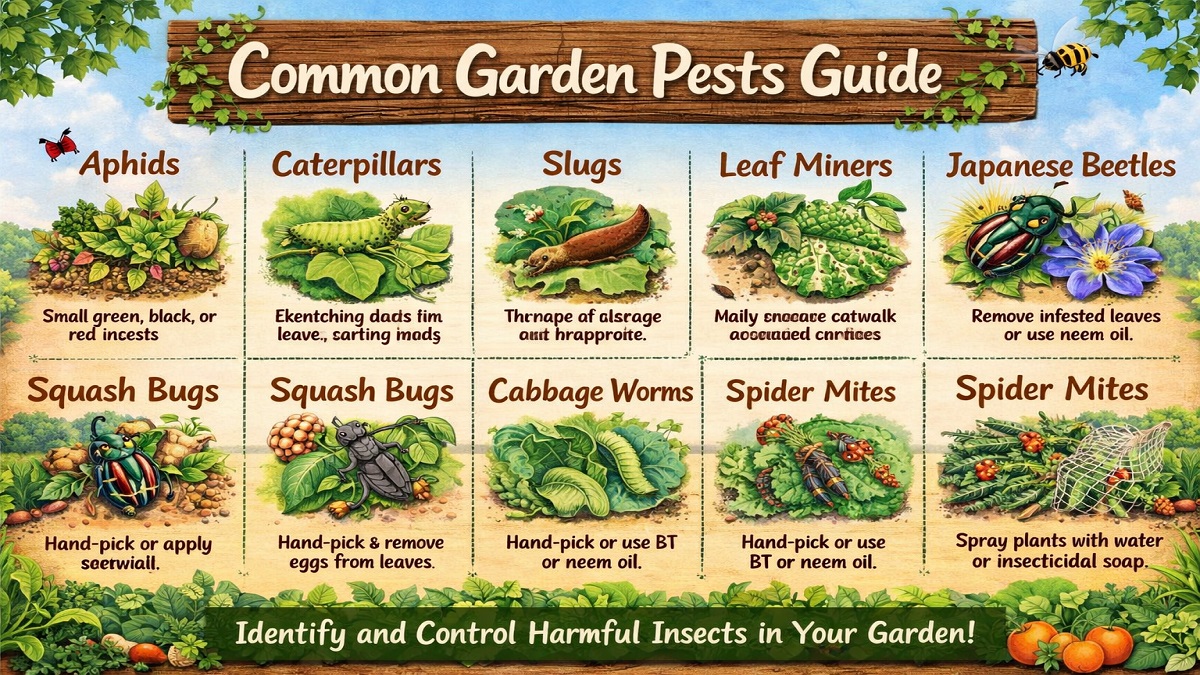
Gardening is one of the most rewarding hobbies, but it often comes with a common challenge—pests. Whether you are growing vegetables, flowers, or ornamental plants, garden pests can quickly damage leaves, stems, roots, and even fruits. Understanding how to identify and manage these pests is essential for maintaining a healthy and productive garden.
This comprehensive guide will help you identify the most common garden pests, understand their behavior, and learn effective organic and chemical-free methods to control them. Whether you are a beginner or an experienced gardener, this guide provides practical solutions to protect your plants.
Why Garden Pests Are a Problem
Garden pests are harmful insects, mites, and small animals that feed on plants. They weaken plant structure, reduce growth, and can even kill plants if left untreated. Pests also spread diseases, making the problem worse over time.
A small infestation can quickly turn into a major problem because pests reproduce rapidly. For example, aphids can multiply in just a few days, covering entire plants and sucking out vital nutrients.
- They damage leaves, flowers, and fruits
- They reduce plant growth and yield
- They spread fungal and viral diseases
- They weaken plant immunity
Most Common Garden Pests
Below are some of the most frequently found garden pests and how they affect plants.
| Pest | Damage Symptoms | Common Plants Affected |
|---|---|---|
| Aphids | Sticky residue, curled leaves | Roses, vegetables, herbs |
| Caterpillars | Holes in leaves | Cabbage, tomatoes |
| Spider Mites | Yellow spots, webbing | Indoor plants, vegetables |
| Whiteflies | Leaf yellowing | Tomatoes, peppers |
| Slugs & Snails | Irregular holes | Leafy greens |
Detailed Pest Identification Guide
Aphids
Aphids are tiny, soft-bodied insects that suck sap from plants. They are usually found in clusters on new growth and the underside of leaves. They produce a sticky substance called honeydew, which attracts ants and causes fungal growth.
Caterpillars
Caterpillars are the larvae of butterflies and moths. While butterflies are beneficial pollinators, their larvae can cause severe damage by chewing leaves rapidly.
Spider Mites
Spider mites are extremely small and often go unnoticed until damage appears. They create fine webbing and cause leaves to develop yellow or bronze spots.
Whiteflies
Whiteflies are small, white, flying insects that feed on plant sap. When disturbed, they fly in clusters. They weaken plants and spread viruses.
Slugs and Snails
These pests are active during damp conditions and feed on soft plant tissues. They leave behind slime trails and irregular holes in leaves.
Signs of Pest Infestation
Detecting pests early can save your plants from serious damage. Here are common signs to watch for:
- Holes in leaves or chewed edges
- Yellowing or wilting leaves
- Sticky residue on leaves
- Webbing or tiny moving dots
- Stunted plant growth
Organic Pest Control Methods
Organic pest control is safe for humans, pets, and the environment. It focuses on natural methods rather than chemicals.
Neem Oil Spray
Neem oil is one of the most effective natural pesticides. It disrupts the life cycle of pests and prevents them from feeding and reproducing.
Soap Spray
A mild soap solution can kill soft-bodied insects like aphids and mites by breaking down their outer layer.
Hand Picking
Removing pests manually is effective for larger insects like caterpillars and beetles.
Introduce Beneficial Insects
Ladybugs and lacewings feed on harmful pests and help maintain balance in the garden.
Preventing Pest Infestations
Prevention is always better than cure. A healthy garden is less likely to attract pests.
- Maintain proper plant spacing
- Water plants correctly
- Remove dead leaves and debris
- Use companion planting
- Inspect plants regularly
Crop rotation and soil health improvement also play a significant role in reducing pest problems.
When to Use Chemical Control
Chemical pesticides should be used as a last resort when infestations are severe and uncontrollable by organic methods.
Always follow instructions carefully and avoid overuse, as chemicals can harm beneficial insects and the environment.
Frequently Asked Questions
What is the most common garden pest?
Aphids are among the most common garden pests, affecting a wide range of plants.
How can I control pests naturally?
You can use neem oil, soap sprays, and introduce beneficial insects like ladybugs.
Are chemical pesticides safe?
They can be effective but should be used carefully and only when necessary.
How often should I check my plants?
Inspect your plants at least once or twice a week to detect pests early.
Can pests kill plants?
Yes, severe infestations can weaken and even kill plants if not treated.