Clematis Groups Explained – Complete Guide to Pruning & Care
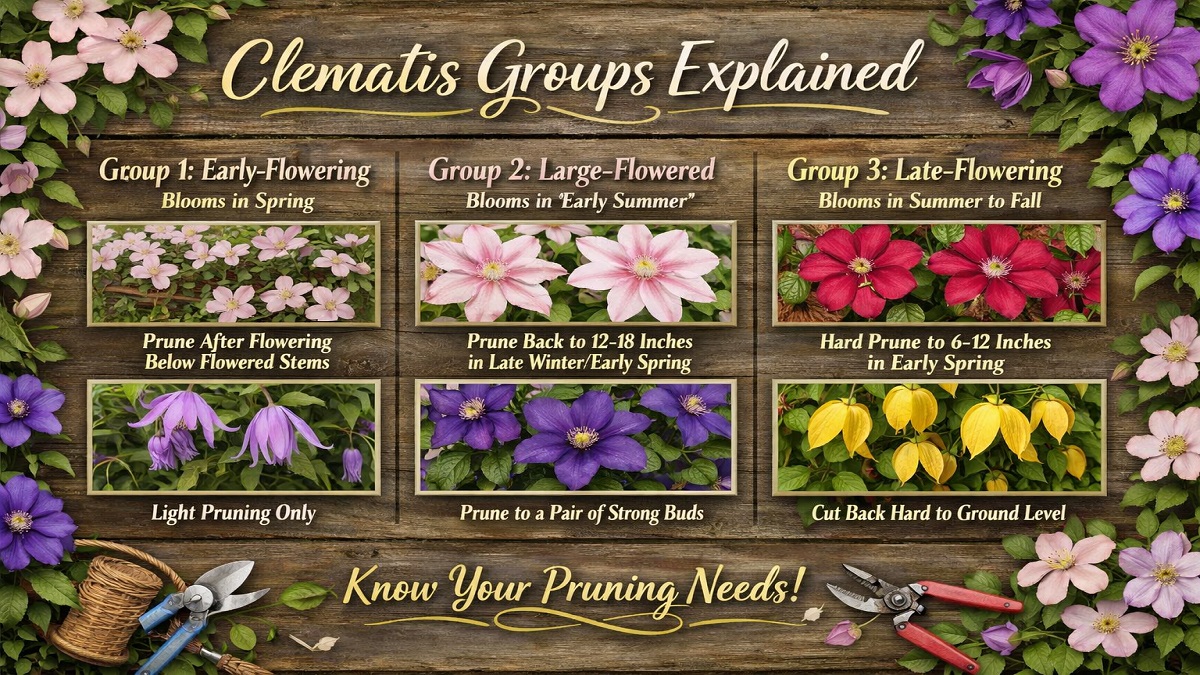
Clematis is one of the most popular and versatile flowering climbers, admired for its vibrant blooms and ability to transform walls, trellises, fences, and pergolas. However, many gardeners struggle with one important aspect—understanding clematis pruning groups.
Clematis plants are divided into three main groups: Group 1, Group 2, and Group 3. These groups determine how and when the plant should be pruned, based on its flowering habits.
Overview of Clematis Groups
The classification is based on:
- Blooming time
- Growth on old or new wood
- Pruning requirements
Group 1 Clematis (Early Flowering)
Characteristics
- Bloom time: Late winter to early spring
- Flowers grow on old wood
- Minimal pruning required
- Often evergreen
Popular Varieties
- Clematis armandii
- Clematis montana
- Clematis alpina
- Clematis macropetala
Pruning Guide
When to prune: After flowering
- Remove dead or weak stems
- Light shaping only
- Avoid heavy pruning
Growing Tips
- Prefers sheltered positions
- Well-drained soil is essential
- Low maintenance
Common Mistakes
- Pruning before flowering
- Over-pruning
Group 2 Clematis (Large Flowered Hybrids)
Characteristics
- Bloom time: Late spring and summer
- Flowers on both old and new wood
- Produces large blooms
Popular Varieties
- Nelly Moser
- The President
- Henryi
- Dr. Ruppel
- Miss Bateman
Pruning Guide
When to prune: Late winter or early spring
- Remove weak stems
- Cut lightly to strong buds
- Deadhead after first bloom
Growing Tips
- Provide strong support
- Keep roots cool
- Feed regularly
Common Mistakes
- Over-pruning reduces blooms
- Ignoring second pruning
Group 3 Clematis (Late Flowering)
Characteristics
- Bloom time: Summer to autumn
- Flowers on new wood
- Requires hard pruning
Popular Varieties
- Clematis viticella
- Clematis jackmanii
- Polish Spirit
- Etoile Violette
Pruning Guide
When to prune: Late winter or early spring
- Cut back to 6–12 inches
- Encourage fresh growth
Growing Tips
- Ideal for beginners
- Easy to maintain
- Needs full sunlight
Common Mistakes
- Not pruning enough
- Confusing with Group 2
Comparison Table
| Feature | Group 1 | Group 2 | Group 3 |
|---|---|---|---|
| Bloom Time | Early Spring | Spring + Summer | Summer to Fall |
| Wood Type | Old Wood | Old + New | New Wood |
| Pruning | Light | Moderate | Hard |
| Maintenance | Low | Medium | Low |
How to Identify Clematis Group
- Early bloom: Group 1
- Repeat bloom: Group 2
- Late bloom: Group 3
General Care Tips
Sunlight
At least 6 hours of sunlight daily.
Soil
Well-drained, fertile soil.
Watering
Regular watering, avoid waterlogging.
Feeding
Use balanced fertilizer in spring.
Support
Provide trellis, fence, or pergola.
Companion Plants
- Climbing roses
- Hydrangeas
- Lavender
- Hostas
Common Problems
Pests
Aphids and slugs.
Diseases
Clematis wilt.
Poor Flowering
Due to incorrect pruning or low sunlight.
Conclusion
Understanding clematis groups is essential for successful gardening. Each group has unique pruning and care needs. Once you master these, clematis becomes one of the most rewarding plants in your garden.
- Group 1: Early flowering, low maintenance
- Group 2: Large flowers, repeat blooms
- Group 3: Easy pruning, late blooms
With proper care, clematis will reward you with stunning flowers year after year.
Frequently Asked Questions
What are the 3 clematis pruning groups?
Clematis are divided into Group 1 (early flowering on old wood), Group 2 (repeat flowering on old and new wood), and Group 3 (late flowering on new wood).
How do I know which clematis group I have?
Identify your clematis by its flowering time. Early bloomers are Group 1, repeat bloomers are Group 2, and late summer bloomers belong to Group 3.
When should clematis be pruned?
Group 1 should be pruned after flowering, Group 2 in early spring with light pruning, and Group 3 requires hard pruning in late winter or early spring.
What happens if you prune clematis at the wrong time?
Pruning at the wrong time can remove flower buds, resulting in little or no blooms for that season.
Which clematis is easiest to grow?
Group 3 clematis varieties are the easiest to grow because they require simple hard pruning and are very forgiving.